Table of Contents
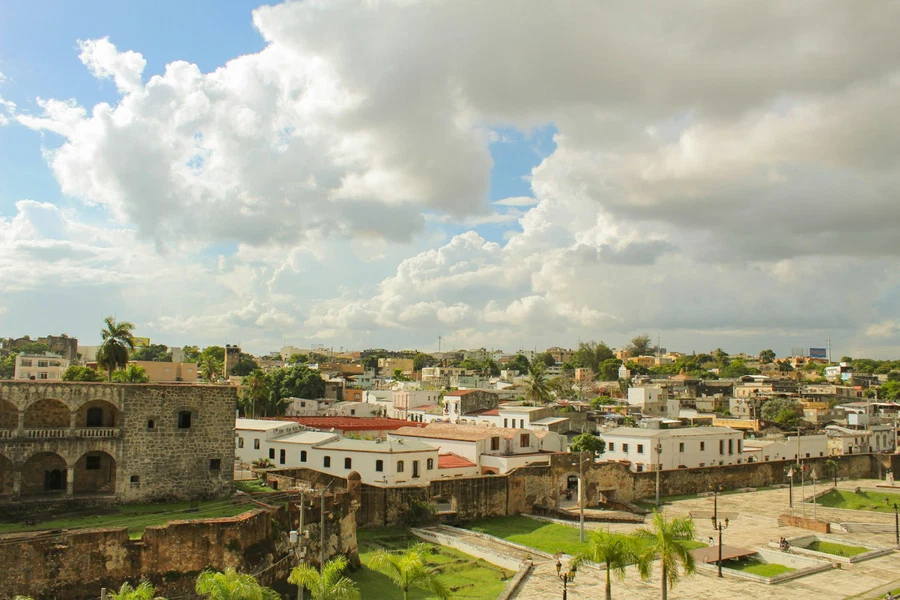
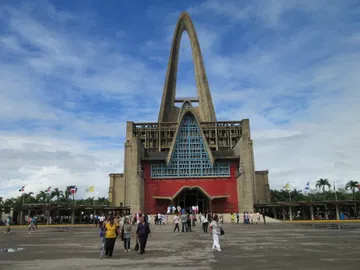 La AltagraciaExplore the province
 AzuaGuide coming later
 BaorucoGuide coming later
 BarahonaGuide coming later
 DajabónGuide coming later
 Distrito NacionalGuide coming later
 DuarteGuide coming later
 El SeiboGuide coming later
 Elías PiñaGuide coming later
 EspaillatGuide coming later
 Hato MayorGuide coming later
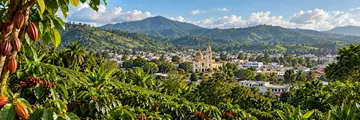 Hermanas MirabalGuide coming later
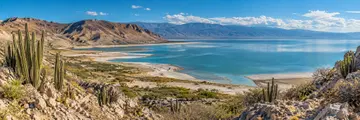 IndependenciaGuide coming later
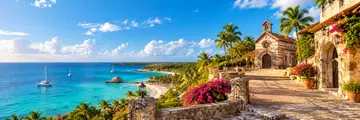 La RomanaGuide coming later
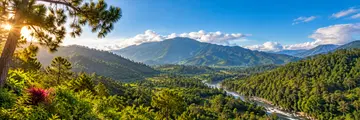 La VegaGuide coming later
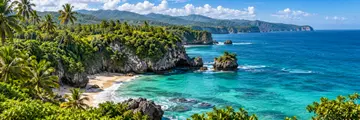 María Trinidad SánchezGuide coming later
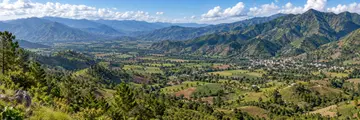 Monseñor NouelGuide coming later
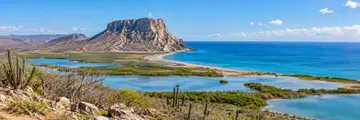 Monte CristiGuide coming later
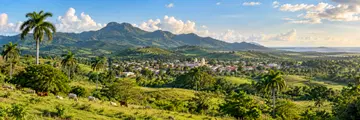 Monte PlataGuide coming later
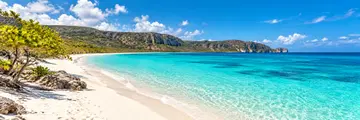 PedernalesGuide coming later
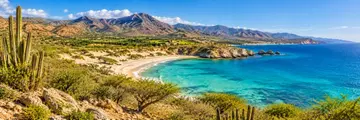 PeraviaGuide coming later
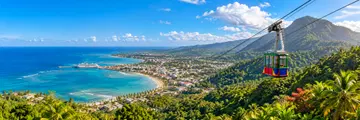 Puerto PlataGuide coming later
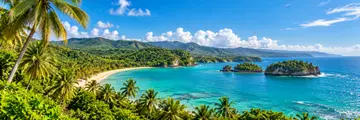 SamanáGuide coming later
 San CristóbalGuide coming later
 San José de OcoaGuide coming later
 San JuanGuide coming later
 San Pedro de MacorísGuide coming later
 Sánchez RamírezGuide coming later
 SantiagoGuide coming later
 Santiago RodríguezGuide coming later
 Santo DomingoGuide coming later
 ValverdeGuide coming later
The Dominican Republic is much more than a tropical beach destination. It is a Caribbean country with high mountains, historic cities, forests, coastal villages, bustling markets, music, baseball and a complex history. Its regions can feel remarkably different from one another.
If you know little about the country, this is where to begin. This guide explains where the Dominican Republic is, what shapes its culture and landscape, how its regions differ, and what to know before visiting. Think of it as an introduction to the country first and a practical travel guide second.
Dominican Republic at a glance #
| Essential fact | What to know |
|---|---|
| Official name | Dominican Republic (República Dominicana) |
| Capital | Santo Domingo |
| Location | The Caribbean, on the eastern side of Hispaniola |
| Neighbor | Haiti, on the western part of the island |
| Official language | Spanish |
| Currency | Dominican peso (DOP) |
| Time zone | Atlantic Standard Time (UTC−4), year-round |
| Landscape | Atlantic and Caribbean coasts, valleys, tropical forests and mountains |
| Known for | Merengue, bachata, baseball, beaches and distinctive regional cultures |
Do not confuse the Dominican Republic with Dominica, a different Caribbean island country. The Dominican Republic shares Hispaniola with Haiti, but they are two independent countries.
Where is the Dominican Republic? #
The Dominican Republic occupies the eastern portion of Hispaniola, one of the Greater Antilles. The Atlantic Ocean lies to the north, the Caribbean Sea to the south, and the Mona Passage separates its eastern shores from Puerto Rico. Haiti is its land neighbor to the west.
These positions matter for travelers. An Atlantic-facing beach can experience different winds and waves from a sheltered Caribbean cove. An inland mountain town can be far cooler than a coastal resort on the same day. Travel distances can also be deceptive: winding mountain roads and city traffic make driving time more important than straight-line mileage.
The country is divided into provinces and the National District. A province is an administrative area, while a tourist destination might occupy only part of it. Punta Cana, for instance, is within La Altagracia province; it is not another name for the entire country.
Geography: mountains, valleys and coastlines #
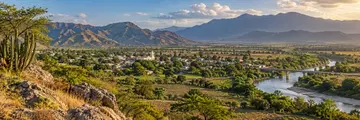
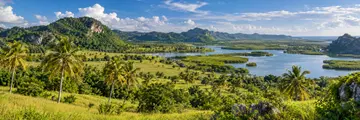
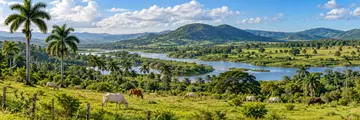
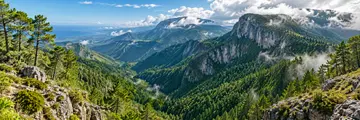
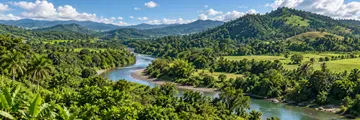
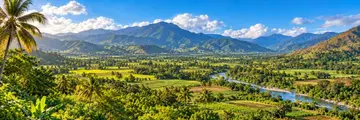
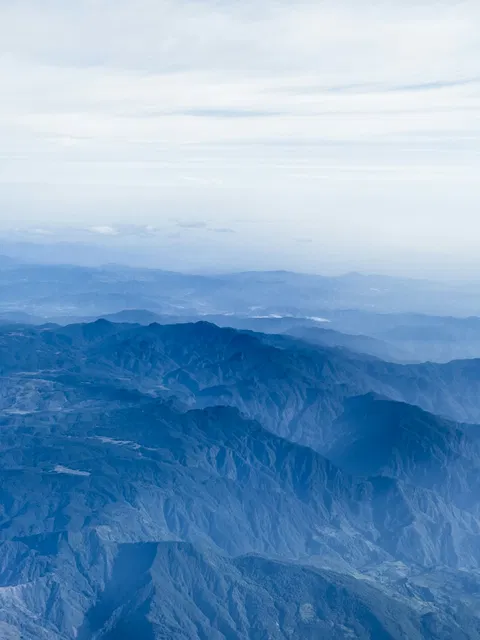
The familiar picture of white sand and palm trees tells only part of the story. The Dominican Republic has extensive mountain systems. Pico Duarte, in the Cordillera Central, is the highest peak in the Caribbean. Valleys, rivers and agricultural plains separate upland ranges. The southwest contains unusually dry landscapes as well as Lake Enriquillo, a saline lake below sea level.
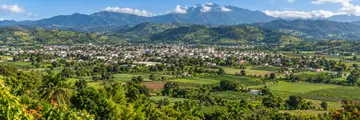
Altitude can transform the climate. Jarabacoa and Constanza are associated with mountain scenery and cooler weather; Samaná with green hills and coastlines; and Barahona with a less-developed southwest where routes demand more preparation.
Nature and protected areas #
Los Haitises National Park is known for limestone formations, mangroves, waterways and caves. Cotubanamá National Park protects important coastal and island environments in the southeast. The highlands offer a different sort of natural experience, while the Samaná Peninsula combines beaches, forested hills and seasonal whale-watching opportunities.
Visits to protected environments need planning. Access conditions, weather, approved guides and rules can change; check with the relevant authority or a responsible local operator.
A brief history of the Dominican Republic #
Hispaniola was inhabited by Indigenous peoples, including the Taíno, long before Europeans arrived. Spanish colonization began after Columbus’s arrival in 1492, bringing conquest, forced labor, disease and tremendous social change. Santo Domingo developed as an early center of Spanish colonial power in the Americas.
Over later centuries, the island experienced colonial rivalry, enslavement, migration and shifting forms of government. The eastern territory declared independence from Haiti in 1844, now commemorated each February 27. The country’s subsequent story includes further foreign intervention, dictatorship, political struggle and transitions toward elected government.
Dominican history cannot be reduced to a few dates. Understanding its Indigenous, African and European influences helps explain contemporary language, food, religious life, music and the sometimes complicated relationship between the neighboring states on Hispaniola.
Santo Domingo and the Colonial City #
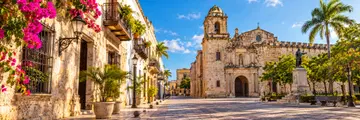
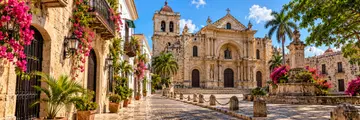
The capital, Santo Domingo, is both a modern metropolis and a place with centuries of history. Ciudad Colonial contains historic streets, religious buildings, fortifications and public squares associated with the early colonial period. It is recognized as a UNESCO World Heritage site.
Unlike a self-contained resort district, the capital invites exploration of museums, neighborhoods, urban food culture and public life. It is especially interesting for visitors who want to learn how the country developed.
People, music, food and everyday culture #
Spanish is the official language. Dominican Spanish includes distinct pronunciation, expressions and regional differences. English can be useful in major hotels and excursion businesses, but learning basic Spanish makes independent travel much easier.
Two internationally influential music traditions are merengue and bachata. Both are rooted in Dominican social life and continue to develop through performances, dancing and recorded music. Baseball is another defining passion, followed in local communities and through Dominican players in international leagues.
Food often centers on rice, beans, plantains, root vegetables, meats and seafood. La bandera is a familiar rice-and-beans meal; mangú is made from mashed plantains; sancocho is a hearty stew. Cooking varies by household and region, and everyday Dominican cuisine cannot be understood from a resort buffet alone.
Carnival, local festivals, family celebrations and neighborhood gatherings are parts of a diverse national cultural life. What you encounter in a rural mountain village will differ from the pace of central Santo Domingo or a beach resort.
Regions of the Dominican Republic: choosing where to go #
There is no single vacation experience called “the Dominican Republic.” Choosing the region is often the most important decision you will make.
| Region or destination | Character | Best reason to consider it |
|---|---|---|
| Punta Cana & Bávaro | Major resorts, long beaches, planned excursions | Easy resort-centered trips |
| Santo Domingo | History, culture, city neighborhoods | Museums, food and urban exploration |
| Samaná & Las Terrenas | Forested coast, beaches, small towns | Nature and relaxed coastal travel |
| Puerto Plata & Cabarete | Atlantic beaches and water sports | Active coastal holidays |
| La Romana & Bayahibe | Caribbean shore and diving excursions | Snorkeling and island day trips |
| Santiago & the Cibao | Regional urban and agricultural life | Everyday culture away from resorts |
| Jarabacoa & Constanza | Cool highlands, rivers, mountain views | Hiking and cooler weather |
| Barahona & the southwest | Dramatic, quieter landscapes | Exploration with extra planning |
Each region deserves its own full guide rather than a few lines copied between destinations. For now, you can explore the developing Punta Cana destination guide and its accommodation overview.
Beaches: understanding the differences #
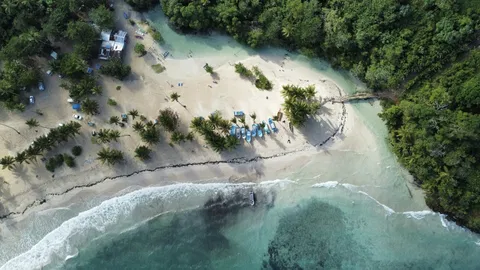
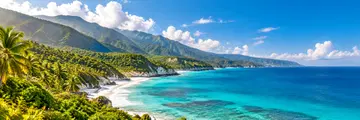
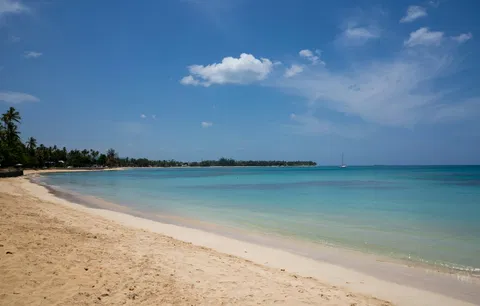
The country has beaches on both Atlantic and Caribbean coasts. Some are lined with resorts, while others are reached through smaller towns or protected landscapes. Clear water in a photograph is not proof of safe swimming. Wind, current, surf, access and seasonal conditions all matter.
On the east coast, Punta Cana and Bávaro are widely associated with larger resort developments. Bayahibe offers a different Caribbean-coast base, particularly for water activities and excursions. On the Samaná Peninsula, the scenery around Playa Rincón and Las Terrenas is known for green hills and striking stretches of coastline.
The north coast offers yet another character, with places associated with surfing and wind sports. Always choose activities according to the actual beach, the day’s conditions and local safety advice.
Climate and best time to visit #
The Dominican Republic has a tropical climate, but weather is not uniform across the country. Lowland coastal destinations are generally warm; mountain towns can be much cooler, particularly at night. Rainfall and wind patterns vary by region and season.
The Atlantic hurricane season runs from June 1 through November 30. That does not mean every trip in that period will experience a storm. It means travelers should monitor reliable forecasts and understand their booking and insurance arrangements.
Rather than choosing a month from an oversimplified chart, match your trip to its purpose:
- Beach holidays: compare local weather, sea conditions, crowds and prices for the exact destination.
- Mountain trips: check rainfall, road conditions and temperature at elevation.
- Nature excursions: confirm whether trails, boats and parks are operating.
- Whale watching: consult current regulated schedules for Samaná; wildlife sightings are never guaranteed.
Where to stay: resorts, hotels, villas and apartments #
The best accommodation depends on where you want to be and how you want to spend your days. An all-inclusive resort is a different choice from a city hotel, private villa or mountain guesthouse.
| Accommodation | A good fit when… | Check before booking |
|---|---|---|
| All-inclusive resort | You want convenient on-site facilities | Which meals, activities and services are included |
| City hotel | You want to explore neighborhoods and museums | Actual location and transportation |
| Villa | A group wants private shared space | Occupancy, pool privacy, services and rules |
| Apartment | You prefer a kitchen or longer stay | Utilities, building rules and cleaning |
| Eco-lodge | Nature and location matter most | Roads, access and weather |
Detailed comparisons, TOP lists and individual property recommendations belong on local accommodation pages, where we can use verified listings instead of making generic claims about the entire country. See the Punta Cana villas guide.
Getting around the Dominican Republic #
The Dominican Republic has eight airports listed as international gateways by the official tourism authority, but not all offer regular international passenger flights or the same kinds of routes. Choosing the airport closest to your actual destination can save hours on the road. Always check the flights operating on your dates: some airports have limited, seasonal or regional service.
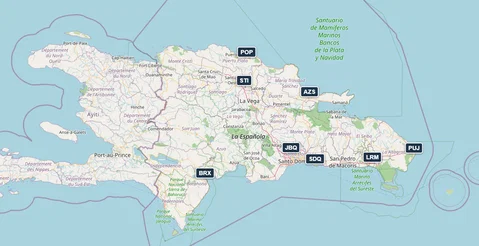
| Airport | Location | Choose it for… |
|---|---|---|
| PUJ - Punta Cana | East coast, La Altagracia | Punta Cana, Bávaro, Cap Cana, Macao and Uvero Alto |
| SDQ - Las Américas | Near Santo Domingo, south coast | Santo Domingo, Boca Chica and Juan Dolio |
| JBQ - La Isabela | North of Santo Domingo | Selected regional and charter connections; not the main long-haul gateway |
| POP - Gregorio Luperón | Puerto Plata, north coast | Puerto Plata, Sosúa, Cabarete and Playa Dorada |
| STI - Cibao | Santiago, north-central interior | Santiago, La Vega, Jarabacoa and parts of the Cibao |
| AZS - El Catey / Juan Bosch | Samaná region, northeast | Las Terrenas, Samaná and Las Galeras |
| LRM - La Romana | Southeast coast | La Romana, Casa de Campo and Bayahibe |
| BRX - María Montez | Barahona, southwest | Barahona and the southwest, where scheduled options can be very limited |
Which airport should a first-time visitor choose? #
If you are spending a week in a Punta Cana beach resort, start by comparing flights into PUJ. If your trip centers on Santo Domingo’s history and city life, look at SDQ. For the Atlantic coast around Cabarete and Sosúa, POP usually makes more geographic sense. For Las Terrenas, compare AZS against alternate airports only after checking realistic transfer times and actual flight schedules.
Airport distance is not the whole calculation. A cheaper ticket may come with a long drive, added transfer costs or an inconvenient late arrival. For multi-region trips, it can even make sense to arrive at one airport and depart from another, if the available tickets and transport work for your route.
Beyond flying, visitors use prearranged transfers, taxis, intercity buses and rental cars. Roads and travel times vary substantially between cities, coasts and mountains. For a first visit, arranging transport from your arrival airport in advance often makes the first day simpler.
Airport locations and travel guidance: Dominican Republic Ministry of Tourism - Air + Sea Travel.
Practical information before your trip #
Entry requirements #
Passport, visa, residence, departure and electronic-entry-form requirements depend on your nationality and itinerary. Check current requirements with Dominican immigration authorities and official travel guidance before departure. Rules can change.
Currency and payments #
The local currency is the Dominican peso (DOP). Cards are common at many major hotels and businesses, while some smaller establishments prefer cash. Always establish whether a quoted price is in pesos or US dollars.
Language, safety and connectivity #
Basic Spanish helps outside tourist districts. Use reputable transportation, keep valuables secure, respect swimming warnings and check health advice specific to your circumstances. Internet and mobile signal are generally easier to arrange in developed destinations than in remote locations.
Frequently asked questions #
Is the Dominican Republic an island? #
The Dominican Republic is an independent country on the island of Hispaniola, which it shares with Haiti. The Atlantic Ocean borders its northern coast, while the Caribbean Sea lies to the south. It is one of the larger countries in the Caribbean region and has more geographical variety than the familiar beach-resort image suggests.
Is Punta Cana the same as the Dominican Republic? #
No. Punta Cana is a destination within La Altagracia province, near the eastern end of the Dominican Republic. It is especially known for resorts and beaches, but the country also includes Santo Domingo, Santiago, Puerto Plata, Samaná, mountain towns and rural landscapes. A visitor who sees only Punta Cana has experienced one part of the country, not the whole island.
What is the capital, and is it worth visiting? #
Santo Domingo is the capital and one of the oldest European-established cities in the Americas. Its UNESCO-listed Colonial City is a strong reason to visit, with historic architecture, streets and public squares. The modern city is much larger than its old town and also offers museums, restaurants and everyday urban life. Plan for heat, traffic and walking conditions when exploring.
What language do people speak? #
Spanish is the official language, including its distinctive Dominican accents and expressions. Staff at major resorts and organized excursions may speak English or other languages, but this varies. Learning a few practical Spanish phrases can help with transport, food, prices and conversations outside the tourist districts.
Does the Dominican Republic have mountains and forests? #
Yes. The country has major mountain ranges and varied ecosystems. Pico Duarte, in the Cordillera Central, is the highest summit in the Caribbean, while places such as Jarabacoa and Constanza offer a cooler, upland experience. Coastal forests, mangroves, wetlands and dry landscapes add to the diversity. Check access and weather conditions before visiting protected or remote areas.
When is the best time to visit the Dominican Republic? #
There is no universally best month for every itinerary. Warm beach weather is common year-round, but rain, humidity, wind and sea conditions vary by region. The Atlantic hurricane season is June through November, which calls for forecast awareness rather than an assumption that every day will be stormy. For a mountain itinerary or a specific wildlife excursion, local conditions may matter more than the general national climate.
Which airport should I fly into? #
Choose according to your destination, not simply the airport name. PUJ is convenient for Punta Cana, SDQ for Santo Domingo, POP for Puerto Plata and parts of the north coast, and AZS for Samaná when suitable service is available. The airport table and map above explain the other gateways. Always compare flight availability and actual transfer time.
Is the Dominican Republic only for all-inclusive vacations? #
Not at all. All-inclusive resorts are one popular option, especially on the east coast. Travelers also visit the capital for history, head to the Cibao for regional culture, explore the mountains, stay in coastal towns or arrange independent road trips. The best plan depends on your interests, transport budget and the amount of time you have.
Sources and further reading #
The sources below provide additional background on the country’s history, heritage, culture and travel conditions. Current entry requirements and weather alerts should always be checked directly with the relevant authority.