Table of Contents
 Punta CanaResorts, beaches and villas
 HigüeyGuide coming later
 BayahíbeGuide coming later
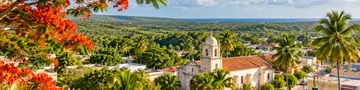 San Rafael del YumaGuide coming later
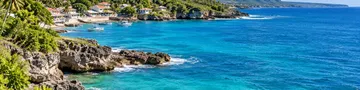 Boca de YumaGuide coming later
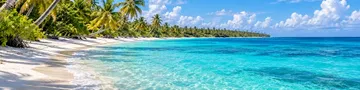 Isla SaonaGuide coming later
La Altagracia is the Dominican Republic’s easternmost province, a place where a major pilgrimage city, farming communities, small fishing settlements and some of the Caribbean’s best-known resort districts exist within the same administrative region. Many visitors know the name Punta Cana but not the province that surrounds it. That distinction matters when planning a trip: the beaches, road journeys, local culture and everyday life vary considerably across La Altagracia.
This is a guide to the province as a whole: where it is, how Higüey differs from the resort coast, which landscapes and communities define it, and how to plan a visit. For detailed hotel and villa choices within Punta Cana itself, continue to our separate Punta Cana destination guide.
La Altagracia at a glance #
| Essential fact | What to know |
|---|---|
| Country | Dominican Republic |
| Provincial capital | Salvaleón de Higüey, usually called Higüey |
| Location | Eastern tip of the Dominican Republic |
| Coastlines | Atlantic Ocean to the north and east; Caribbean Sea to the south |
| Western neighbors | El Seibo and La Romana provinces |
| Principal municipalities | Higüey and San Rafael del Yuma |
| Known for | Punta Cana–Bávaro tourism, Higüey’s basilica, Bayahíbe, Saona Island and protected coastal landscapes |
| Main tourist air gateway | Punta Cana International Airport (PUJ) |
| Language and currency | Spanish; Dominican peso (DOP) |
| Time zone | Atlantic Standard Time (UTC−4), without daylight saving |
La Altagracia is a province, not a city or a resort. The provincial capital Higüey lies inland, whereas the Verón–Punta Cana area anchors the eastern tourism corridor. Bayahíbe, Boca de Yuma and the southern coast add yet another set of experiences. Administrative boundaries and names used by booking sites do not always match a traveler’s idea of a destination.
Where is La Altagracia? #
La Altagracia occupies the eastern end of the Dominican Republic on Hispaniola. The Atlantic Ocean borders the province in the north, the Mona Passage lies to the east, and the Caribbean Sea meets its southern shores. The provinces of El Seibo and La Romana lie to the west.
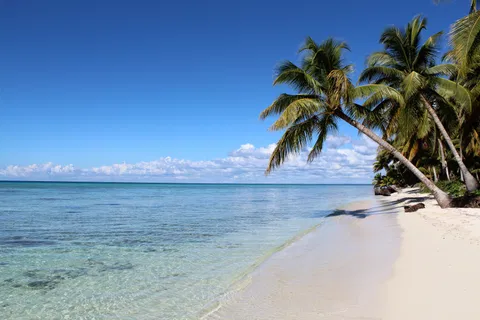
That position produces two distinctly different coastal settings. Along much of the Punta Cana and Bávaro corridor, beaches face Atlantic influences: wind, swell and currents can change conditions from one location to another. Farther south, the Bayahíbe area is associated with Caribbean-facing waters and boat access toward Saona Island. Neither coastline should be treated as uniformly calm or safe for swimming; local conditions and posted warnings take priority.
The province also extends well beyond beachfront hotels. Roads lead inland through settlements, cultivated land and the larger urban center of Higüey. For visitors interested in how the region works, these landscapes are as important to understanding La Altagracia as the resort strip.
Higüey: the provincial capital and cultural center #
Higüey is the administrative, commercial and religious center of La Altagracia. Its streets, shops, neighborhoods and daily rhythm belong to a working Dominican city, not to a purpose-built resort complex. A visit can provide valuable context for travelers who have otherwise seen only their hotel and the airport.
Basilica Cathedral of Our Lady of La Altagracia #
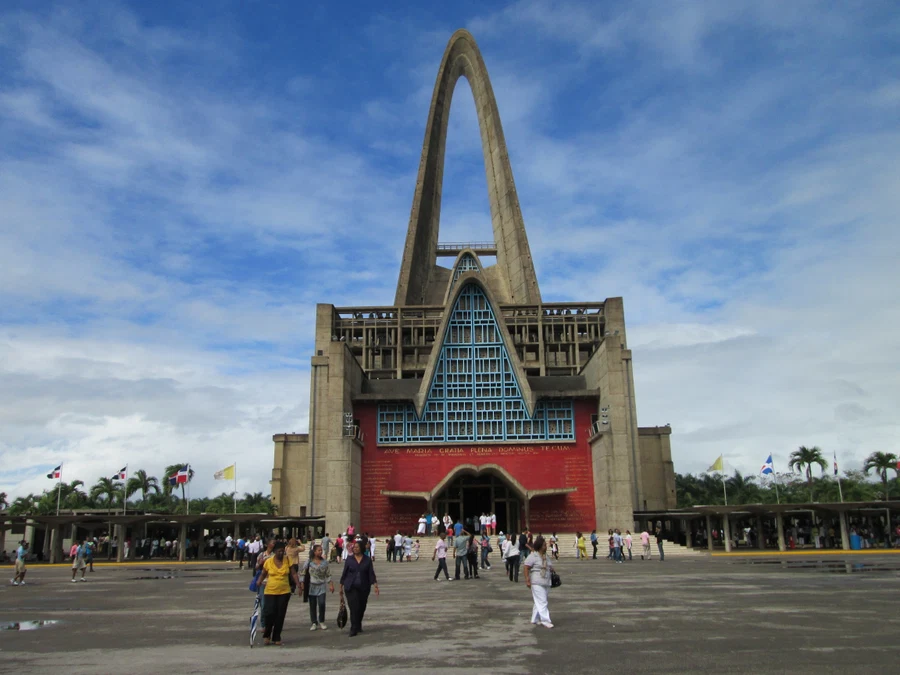
The city’s best-known landmark is the Basílica Catedral Nuestra Señora de la Altagracia, a striking modern sanctuary dedicated to Our Lady of Altagracia. Its monumental concrete arches and sculptural roofline are unmistakable. The annual observance on January 21 draws pilgrims from across the country.
The basilica is an active religious site rather than simply a sightseeing attraction. Dress respectfully, avoid interrupting services and check current visitor information before making a special journey. The adjoining museum and surrounding city are worth considering if you would like a broader cultural outing.
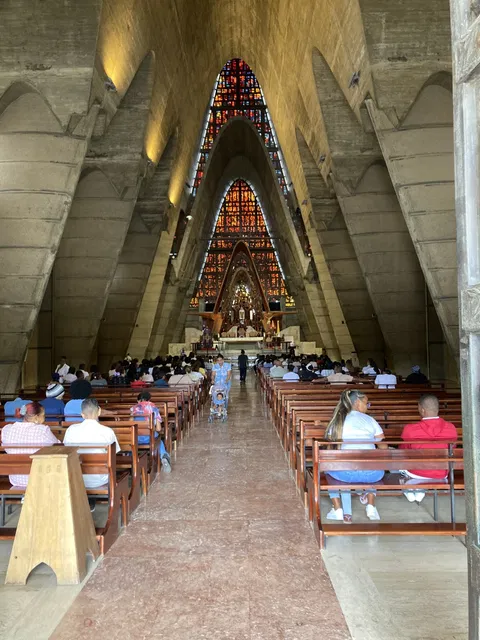
Higüey can work as a half-day cultural stop from the resort area, but its value is not limited to the basilica. Markets, local restaurants and ordinary city streets give a sense of life beyond the tourist corridor. Travelers should approach these places respectfully rather than expecting staged experiences.
The province’s main places and travel areas #
| Area | Character | Best reason to consider it |
|---|---|---|
| Higüey | Inland city, pilgrimage and commerce | History, the basilica, urban Dominican life |
| Verón–Punta Cana and Bávaro | Tourism, residential neighborhoods, resorts and villas | Broad accommodation choices and organized excursions |
| Cap Cana | Planned resort and residential communities | Villa stays, resort facilities and a different coastal setting |
| Macao and Uvero Alto | Northern coastal communities and resort areas | More open Atlantic-facing beaches and quieter surroundings in some locations |
| Bayahíbe | Caribbean coastal community | Diving, snorkeling and excursions toward Saona Island |
| San Rafael del Yuma and Boca de Yuma | Small towns and southern coastal landscapes | Regional history and slower-paced exploration |
This comparison is deliberately province-wide. It is not a ranking of individual Punta Cana neighborhoods or a list of properties. For accommodation decisions, the dedicated Where to Stay in Punta Cana guide explains the local trade-offs in more detail.
Punta Cana and Bávaro: the major tourism corridor #
For international visitors, Punta Cana is often the first point of contact with the province. Its airport, resorts, vacation rentals, golf facilities and excursion operators support a major visitor economy. Yet the area is not one continuous walkable town: choosing a property in Bávaro, Cap Cana, Macao or Uvero Alto can make a substantial difference to transfer times and daily plans.
Our Punta Cana guide covers the destination itself, while the Punta Cana villas guide focuses specifically on villa accommodation. Those topics belong to the city-level branch rather than being repeated here.
Bayahíbe and the Caribbean coast #
Bayahíbe is part of La Altagracia’s southern coastal story, although it is frequently marketed in connection with nearby La Romana. Its fishing-village history, coastal tourism and marine excursions give it a different feel from the larger resort zones facing the Atlantic.
Boat trips to Saona Island (Isla Saona) commonly depart from this part of the coast. The island and surrounding protected environment are sensitive to visitor pressure. Choose licensed operators who explain the route, safety provisions and environmental rules; do not assume every tour uses the same itinerary.
San Rafael del Yuma and Boca de Yuma #
Beyond the best-known holiday zones are the municipality of San Rafael del Yuma and the coastal community of Boca de Yuma. Their smaller scale helps explain why the province should not be reduced to Punta Cana. These places may appeal to travelers with their own transport and time to explore, but facilities and transport frequency can be less predictable than in major tourist districts.
Nature, Saona Island and protected areas #
The province contains protected landscapes, coastal ecosystems and marine environments associated with Cotubanamá National Park and the southeastern coast. Saona Island is one of the region’s most recognizable natural attractions, but it is also a lived-in and managed landscape rather than simply a photo stop.
Responsible travel means keeping to permitted routes, respecting protected habitats, avoiding wildlife disturbance and checking current park or excursion requirements. Sea conditions can change suddenly, and a popular boat-tour photograph does not tell you whether a crossing is suitable on a particular day.
Coastal ecology matters inland, too. Wetlands, vegetation and groundwater systems support communities and tourism. Visitors can contribute by choosing providers with credible waste-management practices and by treating beaches and coastal vegetation as habitats, not just amenities.
History and identity beyond the resorts #
La Altagracia’s story predates modern international tourism. The eastern part of Hispaniola was home to Indigenous Taíno communities, and the region became entangled in the Spanish conquest and colonial settlement. The historical district of Higüey developed within that longer and often violent history.
The province was established in the twentieth century after separation from El Seibo. More recently, the growth of the Punta Cana–Bávaro tourism industry transformed settlement patterns, employment and infrastructure. Coastal development brought jobs and investment, but also pressures on housing, transport, water and natural environments.
Today, the province combines religious traditions, ordinary urban and agricultural life, newer residential districts and an economy strongly influenced by international tourism. Seeing these strands together gives a more accurate picture than viewing the entire province through a resort brochure.
How to get around La Altagracia #
Punta Cana International Airport (PUJ) is the most useful arrival airport for much of the east-coast tourism corridor, but airport access does not mean every destination in the province is nearby. A resort transfer and an independent journey to Higüey, Bayahíbe or Boca de Yuma are very different trips.
- Private transfers: practical for airport-to-hotel journeys, families with luggage and destinations without frequent public connections. Confirm the exact property address and total price.
- Rental car: offers flexibility for visiting several towns or coasts, but requires attention to road conditions, navigation, insurance terms and parking.
- Taxis and organized excursions: useful for individual outings; confirm pickup points and return arrangements.
- Local buses and shared transport: exist on parts of the regional network, although routes, schedules and comfort may be less predictable for first-time visitors.
Avoid planning multiple far-apart locations by looking only at a map. Allow time for local traffic, possible roadworks, weather and stops.
Weather and when to visit #
La Altagracia is tropical and warm through the year. There are seasonal changes in rainfall, humidity, wind and tourist demand, but no single month guarantees calm seas or dry weather across the entire province. Conditions near an Atlantic-facing beach may differ from those on the Caribbean side on the same day.
The Atlantic hurricane season runs from June through November. Not every visit during these months is disrupted, but travelers should monitor official forecasts, review travel insurance and keep transport plans flexible when alerts are issued.
High-demand holiday periods can affect accommodation pricing and road traffic. The January 21 religious observance can also bring exceptionally large crowds to Higüey, a meaningful occasion for pilgrims but a different experience from an ordinary sightseeing day.
Where to stay: choose a destination before a property #
Because La Altagracia contains different types of coast, communities and tourism, the first accommodation decision should be geographical. If your holiday revolves around beach facilities and organized activities, the Punta Cana tourism corridor may be the easiest base. For a Caribbean coast emphasis and boat excursions, Bayahíbe presents a different option. Higüey makes more sense as a city visit or a locally focused stay than as a substitute for a beachfront resort.
Practical considerations before exploring #
Carry drinking water and sun protection for long outings. Confirm whether rural or coastal destinations accept cards; cash may be useful for small expenses. Verify opening hours rather than relying on old itinerary pages, especially for places of worship, museums and protected areas.
Use official weather warnings and follow local swimming-safety notices. When booking a tour, ask about cancellation rules, pickup area, travel time and any park access costs. A relatively low headline price can conceal long transfers or extra fees.
Frequently asked questions #
Is La Altagracia the same as Punta Cana? #
No. Punta Cana is a major travel destination within La Altagracia province. The province also includes Higüey, Bayahíbe, San Rafael del Yuma and other communities and landscapes.
What is the capital of La Altagracia? #
Salvaleón de Higüey, commonly called Higüey, is the provincial capital. It is inland rather than on the beachfront resort strip.
Is Bayahíbe in La Altagracia or La Romana? #
Bayahíbe is administratively in La Altagracia province, although tourism advertising often groups it with La Romana, the neighboring province and regional travel gateway.
Is Saona Island part of La Altagracia? #
Yes. Isla Saona lies off the province’s southern coast and is associated with the protected natural areas of the southeast.
Can I visit Higüey from Punta Cana? #
Yes. It is a practical day outing for many travelers. Allow time for the journey and check access to the basilica, especially on religious holidays.
Which airport is best for La Altagracia? #
For most stays in the Punta Cana tourism corridor, Punta Cana International Airport (PUJ) is the primary gateway. For other parts of the province, compare actual road travel times rather than choosing an airport solely from a regional label.
Sources and further reading #
- Dominican Republic Ministry of Environment: La Altagracia provincial information
- Dominican National Statistics Office: Atlas de La Altagracia (2026)
- Higüey municipal government: tourism information
- Basilica of Our Lady of Altagracia: official visitor information
This is an editorial overview of the province. Exact transport services, opening hours, protected-area access and tour conditions should be confirmed with the relevant provider before travel.