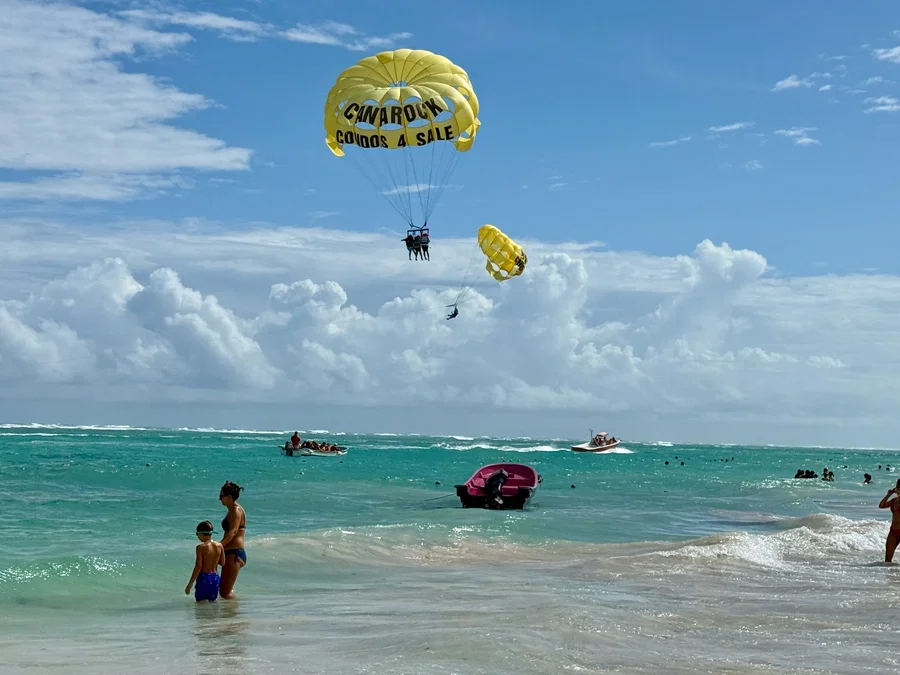



You can visit Bávaro Beach without staying at an all-inclusive resort. The beach itself is part of the Dominican Republic’s publicly protected coastline, but knowing that does not automatically tell you which road or footpath leads to the sand. Hotels can restrict access through their buildings and grounds, and the lounge chairs along the beach are not automatically included in a public visit.
That distinction is particularly important here. Bávaro is not a single gate or beach club. It is a long stretch of the Punta Cana resort coast, with different public approaches, hotel frontages, restaurants, boat activities and swimming conditions along the way.
For an independent day out, Bibijagua, Los Corales and El Cortecito are useful areas to investigate first. Choose the approach that fits where you are staying, confirm the exact entrance before traveling and treat the day’s sea conditions as a separate decision from whether you can reach the beach.
Where is Bávaro Beach, and what counts as Bávaro?#
Playa Bávaro lies on the eastern coast of the Dominican Republic, within the greater Punta Cana destination in La Altagracia Province. It is the familiar palm-lined resort shoreline associated with many Punta Cana travel photographs. The Dominican Ministry of Tourism identifies Playa Bávaro as the area’s principal hotel-beach setting and also points visitors toward Playa Bibijagua and Los Corales for local atmosphere.
The name is used somewhat loosely in hotel addresses. A property advertised as being in Bávaro may sit on the main beachfront, in an inland commercial area or farther along a neighboring resort corridor. That is why a beach trip should begin with a specific public access point, not a search for any hotel with “Bávaro” in its name.
This article deals with the shoreline itself: entrances, public use, conditions and a practical independent visit. For the separate question of where to stay, which streets are walkable and how the neighborhood is laid out, see our Bávaro Area Guide.
Is Bávaro Beach public or private?#
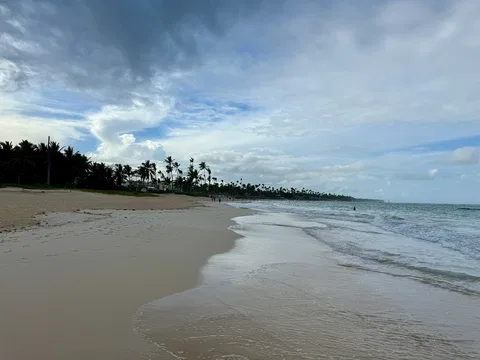
The legal starting point is clear. Article 145 of Dominican Republic Law 64-00 describes the maritime-terrestrial coast as state public property and recognizes public enjoyment subject to applicable restrictions. Article 147 includes the coastal strip prescribed in the legislation. That public-domain framework does not turn a hotel lobby, private driveway or resort garden into an unrestricted entrance.
For visitors, distinguish three things:
| What you want to use | What to verify |
|---|---|
| The public coastline and sand | Identify a lawful, usable route to the shore |
| A route through a beachfront hotel or residential property | Do not assume access is permitted for non-guests |
| Hotel sunbeds, pools, toilets, beach service or restaurants | Confirm guest privileges, day passes or separate charges |
Being able to walk the shoreline also does not mean every part is equally easy to traverse. Waves, temporary closures, beach work, local safety controls and natural obstacles can change the practical route.
You do not need to buy a hotel stay to visit the public shore, but there can still be legitimate charges for a chair, an umbrella, a meal, a boat excursion or an independently operated parking area. Ask what a charge covers before paying, and do not confuse a vendor’s service price with a fee to use the public beach itself.
Public beach access points: which entrance should you use?#
These are areas to navigate toward, not promises that a particular gate or path will be open every day. Road access, parking and individual business entrances may change. Confirm the actual route with your accommodation, driver or a current local contact.
| Area | Why you might choose it | What to check before leaving |
|---|---|---|
| Playa Bibijagua / Plaza Bibijagua | An established shopping and beach-access landmark near the southern part of the Bávaro shoreline | The current pedestrian approach, parking arrangements and boat-activity area |
| Los Corales | A beachside residential and visitor district with restaurants and vacation rentals | The usable street-to-sand path, any access rules around adjacent properties |
| El Cortecito | A coastal neighborhood known for small businesses and beachfront dining | Which street leads to the public shoreline and whether your intended restaurant is open |
| Other resort-front sections | Convenient if you are already staying at that particular property | Whether non-guest access is available without crossing private grounds |
Playa Bibijagua: a practical starting point for a day visit#
Playa Bibijagua is a useful place to begin if you want to reach the shore without entering a large resort. The Plaza Bibijagua market area provides a recognizable landmark, and visitors may encounter souvenir stalls and organized beach activities nearby. The Dominican Republic tourism website identifies Bibijagua among Punta Cana’s visitor attractions.
Do not treat a market or parking-area map pin as the last step of the route. Ask where pedestrians currently approach the beach and whether you need to walk around a business rather than through it. If you arrive by taxi, agree on a clear pickup point before heading to the sand.
Boat excursions and watersports can operate along busy stretches. Look around before entering the water, especially with children. A convenient public access point is not automatically the quietest swimming area.
Los Corales: beach access near rentals and restaurants#
Los Corales can be convenient for people staying in a nearby apartment or who want to combine beach time with a meal outside an all-inclusive resort. Some local streets lead toward the shore, but street access and private property access are different things.
Use the exact address of your rental, a clearly identified public approach or directions confirmed by a local business. Do not assume that a path shown on an old map still passes through the same premises or that an adjacent resort will allow outsiders to enter.
The practical advantage here is the ability to plan around a neighborhood beach day, rather than relying on the services of one large hotel. It does not guarantee free loungers, restrooms or unrestricted swimming.
El Cortecito: small businesses and an independent beach stop#
El Cortecito is another established coastal part of Bávaro. Its restaurants and shops appeal to visitors who want to do more than spend the whole day inside a resort. Access can be more convenient if your accommodation is already in this neighborhood.
If coming from another part of Punta Cana, agree on your drop-off before traveling. Avoid asking a driver simply to take you to “Bávaro Beach”: you could end up far from the approach you had in mind.
For lunch, confirm the current menu, prices and whether the restaurant’s facilities are reserved for customers. The fact that a dining terrace faces the sea does not determine your rights to a neighboring hotel’s chairs or pool.
Can you swim at Bávaro Beach?#
Sometimes conditions are favorable, but there is no beach-wide guarantee of safe swimming. An offshore reef can shelter certain sections of Bávaro, which helps explain the attractive blue-water photographs. It does not eliminate wave hazards, changing currents, boat traffic or difficult conditions elsewhere along the coast.
Bávaro is a long shoreline; what you see from one hotel or access point may not apply to another stretch that day. Wind, swell direction and local seabed shape can all influence the water. A calm morning photograph is not a safety assessment.
Before entering the sea:
- Look for warning signs and flags at your actual location. Their meaning and use can depend on the local operator or beach-safety authority.
- Ask a lifeguard, if one is present. Do not assume continuous coverage along the whole public beach.
- Watch breaking waves and water movement. Smooth-looking water between breakers can sometimes be a channel carrying water offshore.
- Identify boats and watersports areas. Stay clear of launches, equipment and traffic.
- Keep a pool or dry-sand plan available. If you cannot establish that conditions are suitable, do not enter.
A beach can be enjoyable for walking and relaxing even when conditions are unsuitable for swimming. Families who specifically want swimming should prioritize an appropriate, supervised area on the day, not simply book an accommodation that says it has “calm water.”
Rip currents and shorebreak: what visitors should know#
NOAA and the U.S. National Weather Service warn that rip currents are fast-moving channels of water that travel away from shore. They do not ordinarily pull a swimmer underwater, but they can cause exhaustion or panic by carrying someone away from the beach.
If caught in a rip current, do not fight directly against it. Stay calm, float or tread water to conserve energy, and if you can do so, swim along the shore to move out of the current before heading back. Wave and call for assistance if necessary. Follow instructions from local lifeguards over generalized advice.
Waves that break directly onto the beach, known as shorebreak, can also knock people over and cause injuries. Young children should remain under close supervision even at the water’s edge.
NOAA’s warnings describe general marine hazards; they are not a daily forecast for Playa Bávaro. Check relevant local conditions and on-site information before entering the water.
What about seaweed and sargassum?#
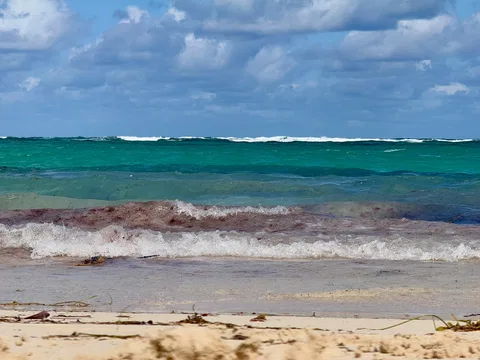
Sargassum is a floating brown seaweed that can wash ashore when wind and ocean currents carry it toward the beach. In Punta Cana, it can affect the appearance and enjoyment of some shoreline sections, but the amount is highly variable across places and dates.
Do not choose a hotel or beach entrance based on a promise that Bávaro is always seaweed-free during a particular month. An earlier review may document a real issue without predicting the day of your visit. Some hotels organize shoreline cleanup, while other parts of the public beach have different management arrangements.
For a visit in the next few days, look for recent local observations, ask your accommodation about the specific beach frontage and check whether marine conditions have changed. If seaweed is significant, switch to a beach walk on a more comfortable section, an off-beach activity or an on-site pool rather than forcing a disappointing swimming plan.
Our Best Beaches in Punta Cana comparison explains why different shorelines should not be treated as identical. For monitoring resources and the broader seasonal pattern, read our Punta Cana seaweed and sargassum guide.
What facilities are available if you’re not a resort guest?#
The answer depends on the exact access point. A public shoreline may have businesses offering food, chairs, umbrellas or excursions, but restrooms and changing areas are not guaranteed public amenities. Some may be available only to paying customers.
Use this checklist:
| Service | Sensible expectation |
|---|---|
| A place on the public sand | No all-inclusive reservation required just to be on the public shore |
| Chair or umbrella | Often an independent rental or a venue benefit; confirm price first |
| Restaurant, drinks or snacks | Pay the current menu price; ask about taxes and service |
| Restroom or changing space | Verify with a nearby business before relying on it |
| Watersports or boat trip | Separate operator, terms and safety briefing; never assume a walk-up slot |
| Lifeguard | Coverage varies; do not presume one will be present |
| Parking | Location and current conditions vary by entrance; ask before leaving the car |
Be especially careful about vague offers that combine a chair, refreshments and other services. Ask for a clear total price before agreeing.
Bring your own water, towel, suitable footwear and sun protection. Keep essential valuables secured rather than unattended on the sand. If you plan to stay for several hours, think about shade and how you will return to your accommodation.
How to get to Bávaro Beach independently#
Bávaro is spread over multiple districts. The most important detail for a taxi, ride-hailing service or private transfer is not the phrase “Bávaro Beach” but the actual entrance you intend to use.
For a visit from elsewhere in Punta Cana:
- Decide whether Bibijagua, Los Corales or El Cortecito best matches the outing you want.
- Share a specific current map pin or street landmark with the driver and confirm that it leads to a usable pedestrian approach, not a resort gate.
- Agree on the return pickup location and arrange a way to contact the driver.
- If driving yourself, ask about current parking rules and security at that entrance before leaving valuables in the vehicle.
- Allow for traffic and differences between the hotel-side and inland road network.
No single travel-time estimate applies from every resort, villa and apartment in Punta Cana. Your hotel name, exact entrance, road route and traffic matter.
A resort transfer may bring you to its guest entrance, which is not the correct arrival point for an independent public-beach visit. If you are arriving through Punta Cana International Airport, use our airport arrivals and ground transport guide to organize the main airport transfer before planning a separate beach excursion.
Is Bávaro Beach a good independent day trip for families?#
It can be. There is room for sand play, beach walks and a meal near public approaches. But a family trip goes more smoothly if you plan shade, restroom access and a swimming alternative before you leave.
For toddlers and younger children, the best beach section may be one with reliable shade and practical facilities, even if another part of the coast looks prettier in photographs. Check the real sea conditions when you arrive and keep children away from shorebreak.
For an older child who wants watersports, investigate qualified operators and the required swimming ability. A vendor being present does not automatically make the sea suitable for instruction on that day.
If easy swimming with children is the central requirement, compare the actual facilities of your accommodation rather than relying solely on Bávaro’s reputation. Access to a suitable pool or a supervised water area can be a major advantage on rough-sea days. Our All-Inclusive Resorts on Bávaro Beach guide covers the separate question of what a resort booking includes.
How is Bávaro Beach different from Macao or Uvero Alto?#
Bávaro is most strongly associated with a long resort coastline and several nearby visitor districts. Macao is a more obvious public day-out and surf destination; Uvero Alto is a more spread-out northern resort coast with potentially stronger Atlantic conditions.
That does not mean every stretch of Bávaro is busy, every point on Macao has the same surf or every Uvero Alto hotel is isolated. Choose by the exact location and your actual activity.
For a broad comparison of all Punta Cana beach areas, use our Best Beaches in Punta Cana guide. If Macao is the next stop, the Macao Beach access and surf guide explains that public beach’s separate safety and transportation considerations.
The difference from our Bávaro Area Guide is deliberate: that guide helps choose where to stay and what is walkable. This page is for visitors asking how to get onto the beach and what to expect once there.
A realistic plan for your first Bávaro Beach visit#
Start with a confirmed entrance, not a hotel photo. Arrange transport to Bibijagua, Los Corales or El Cortecito, depending on the section you want to explore, and make sure the driver knows where to pick you up.
When you arrive, check signs, sea conditions and boat traffic before deciding whether to swim. Spend time walking the shore or relaxing on your own towel. If you want chairs, food or an excursion, agree on the total cost as a separate purchase.
Bávaro works well when you treat it as a real stretch of coastline rather than a packaged amenity that all visitors can use in the same way. The beach is public, but the entrance, services and conditions are local and specific. Plan those details first and you can enjoy the part of Playa Bávaro that actually fits your day.
Sources and further reading#
- Dominican Republic Ministry of Tourism: Punta Cana - Playa Bávaro, Bibijagua and Los Corales as official destination attractions.
- Dominican Republic Law 64-00, Articles 145-147 (WIPO Lex) - legal public-domain framework for the maritime coast; does not establish a particular private-property access right.
- Playa Bávaro visitor guide (Visita República Dominicana) - descriptions of Bibijagua, Los Corales, El Cortecito and local public approaches; verify present-day access before setting out.
- NOAA / National Weather Service: Dangerous Currents - rip-current hazards and response.
- NOAA / National Weather Service: Rip Current FAQs - surf zone conditions, supervision and local warning flags.
- Photographs: Oleg Yunakov, Bávaro Beach No. 05, 2024 (hero), No. 26, No. 42. All resized for the web, attribution under CC BY-SA 4.0; the images document their 2024 dates and are not current beach-condition reports.