The best beach in Punta Cana depends on how you plan to spend your time. A resort guest looking for a long shoreline walk needs something different from a family hoping to swim in gentle water or someone who wants a surf lesson and a local fish lunch.
That distinction matters because Punta Cana is a destination, not one continuous beach with identical conditions. The coast includes busy resort districts, public beaches reached independently, stretches with powerful Atlantic surf and managed communities where a visitor needs to arrange access before arriving. Beautiful turquoise water is not proof that a particular swimming spot is safe today.
For most trips, start with Bávaro for the classic resort-beach setting, Macao for surfing and a public day out, Juanillo for a scenic Cap Cana beach visit with access arranged in advance, or Uvero Alto for a resort-centered holiday on a wavier Atlantic shoreline. Cabeza de Toro and smaller Bávaro-area stretches are worth considering too, depending on where you stay.
This guide compares the choices without claiming that one beach always has the calmest sea or the cheapest access.
Quick comparison: which Punta Cana beach fits your trip?#
| Beach or coastal area | Good match for | Access and swimming reality |
|---|---|---|
| Bávaro Beach | The classic long resort shoreline, walking and convenient accommodation choices | Access points vary; beach conditions differ along the coast |
| Macao Beach | Public day trips, local fish and surf lessons | Public shoreline, strong surf at times; do not count on casual swimming |
| Juanillo Beach, Cap Cana | White-sand scenery, beach clubs and a planned beach day | Confirm Cap Cana entry and specific venue arrangements in advance |
| Uvero Alto | Large-resort stays, beach walks and a quieter surrounding district | Exposed Atlantic surf; swimming may be restricted by conditions |
| Cabeza de Toro | A resort-focused holiday in its own coastal district | Check the exact hotel stretch, entry route and current beach conditions |
| Arena Gorda | Big beachfront resorts and long stretches of sand | Closely linked to resort properties; public access routes require checking |
| Los Corales / El Cortecito | Staying closer to independent dining and visitor services | Access and walkability vary by the specific street and beach entrance |
| Playa Blanca / Punta Cana coast | A beach outing near the airport area with facilities arranged ahead | Do not assume unrestricted entry through managed resort grounds |
The descriptions are travel-planning matches, not swim-safety ratings. No beach is automatically safe for every swimmer, in every season or at every point along its shore.
If you are deciding where to sleep rather than just where to spend an afternoon, the Punta Cana Where to Stay guide considers the wider neighborhood and accommodation choices.
Bávaro Beach: the classic Punta Cana resort shoreline#
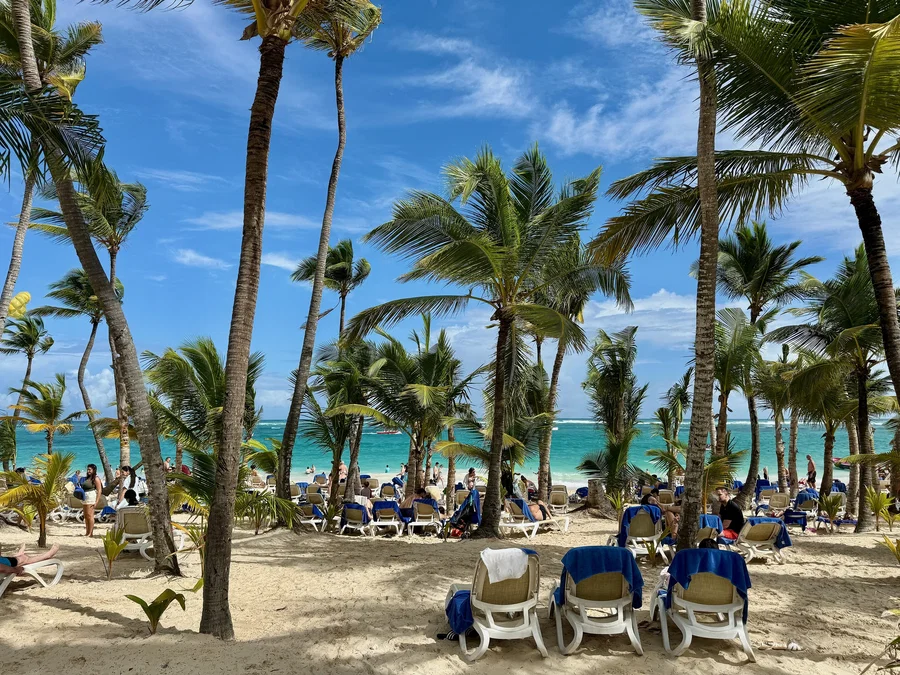
Bávaro is the beach most travelers picture when they think of Punta Cana: broad pale sand, coconut palms, turquoise water and a long collection of hotels. The Dominican tourism authority highlights it as the region’s main resort beach, surrounded by beachfront accommodation.
Choose Bávaro if you want a beach-centered vacation with a wide choice of places to stay. Depending on the section, you may find restaurants, excursions and beach activities beyond your hotel’s grounds. But Bávaro is a broad area rather than one compact strip. A resort in the wider Bávaro district does not guarantee you can walk to every restaurant or other resort.
What to know about swimming and access#
Bávaro often looks more sheltered in photographs than Macao, but it is not a permanently flat-water lagoon. Wind, swell, seaweed and the precise beach section change the experience. Check flags and lifeguard advice where you actually intend to enter the water.
Beachfront resorts may control access through their land and provide loungers only to their guests. Being allowed to walk along the shoreline is not the same as being able to use hotel facilities. If you want to visit without a resort booking, find a confirmed public approach and plan transport back.
Our Bávaro neighborhood guide explains the wider districts and where to stay; the Bávaro Beach access guide covers Bibijagua, Los Corales, El Cortecito and swimming conditions for day visitors.
Macao Beach: public access, waves and local food#
Macao offers something different: a broad public beach with an open Atlantic feel, surfing and local fish restaurants. The official Dominican tourism website identifies it with strong swells, trade winds and surf instruction.
Choose Macao for a planned day trip, surfing or a beach visit outside an all-inclusive property. It is a good option when your idea of a beach day includes watching waves, walking on the sand and eating nearby, even if you decide not to enter the sea.
Because the beach is known for its waves, do not assume that surf-friendly water is suitable for unsupervised swimming. Rip currents and powerful shorebreak are possible. A surf lesson should be adapted to current conditions and provided by a qualified instructor; it does not make an adjacent swimming area safe.
Before arriving, confirm the public access point, any fee for optional chairs or umbrellas, and where your driver can return to collect you. The shoreline itself does not require an all-inclusive hotel booking, but private services are separate.
For instructions on visiting and practical water-safety advice, read the dedicated Macao Beach access, surf and swimming guide.
Juanillo Beach: scenery and a planned Cap Cana beach day#
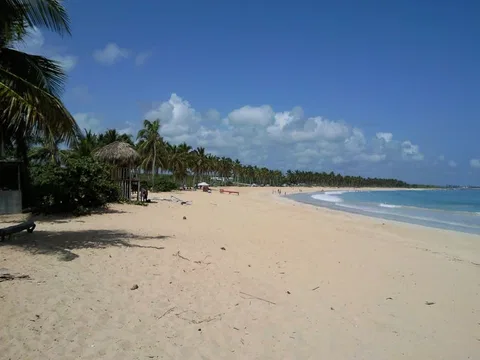
Juanillo is known for white sand, tall palms and luminous turquoise water. The official tourism website describes beach activities and places to eat in the area. It can be an attractive setting for a relaxed beach outing, but its location within Cap Cana changes the logistics.
Cap Cana is a managed coastal community, not a freely accessible extension of central Bávaro. A restaurant reservation, permission to enter the community and entitlement to use a particular beach club’s loungers can be three separate things.
Choose Juanillo when you are willing to arrange access and transportation in advance. Ask the venue or host how visitors enter, whether a reservation or day pass is required, what facilities are included and how the driver should handle the return pickup. Do not rely on an old internet post that assumes all parts of Juanillo have the same entry policy.
The tourism authority describes the beach as appealing for floating and other water activities, but that is not a promise that the water will be flat when you arrive. Current wind, marine conditions and any local warnings still determine whether you should swim.
For entry arrangements and the wider community layout, use our Cap Cana guide.
Uvero Alto: long Atlantic beach and resort-based stays#
At the northern end of the greater Punta Cana resort coast, Uvero Alto is more spread out than many Bávaro districts. Its wide white-to-golden beach is a strong part of its appeal, especially for travelers who intend to spend much of the trip at their hotel.
There is a practical trade-off. The Dominican tourism authority specifically mentions strong waves and undertow along Playa Uvero Alto, especially on isolated stretches away from resorts.
Choose Uvero Alto for its shoreline atmosphere, beach walks and resort setting, not because the name guarantees ideal swimming. Find out which designated swimming areas or pools your accommodation provides when the sea is rough. Families with young children should weigh that answer carefully.
Also consider the off-property logistics. Restaurants, activities and other beach districts are not necessarily a convenient walk away, so a quieter setting can mean more reliance on transfers and arranged excursions. Our Uvero Alto area guide goes into beach access, transport and the wider neighborhood.
Cabeza de Toro: an alternative resort beach district#
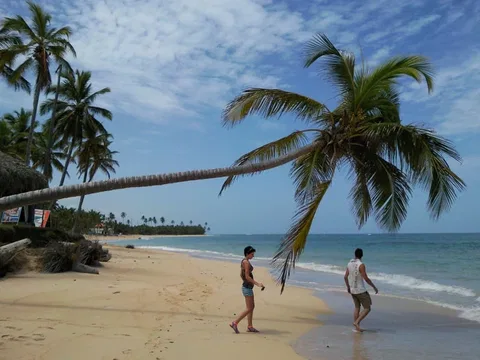
Cabeza de Toro lies away from the busiest central Bávaro streets and has its own group of beachfront resorts. The Dominican tourism website includes it among the area’s family-friendly beach choices.
Choose Cabeza de Toro when an individual resort’s pools, beach setup and location fit your vacation plans. It can be a useful alternative if you want a resort holiday without selecting a hotel purely because its booking address says Bávaro.
The exact property still matters more than the district label. Check whether the resort has supervised ocean access, the type of beach in front of it, whether water sports or excursions share the area, and what is included in the booking. Conditions can vary even within the same district.
For non-guests planning a day visit, confirm a legitimate access route and do not assume that every hotel’s entrance, restaurant or loungers are open to the public.
Arena Gorda: broad sands beside large resorts#
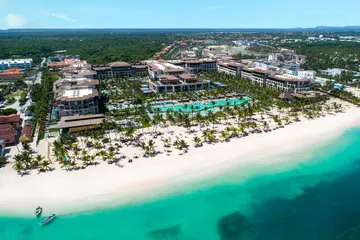
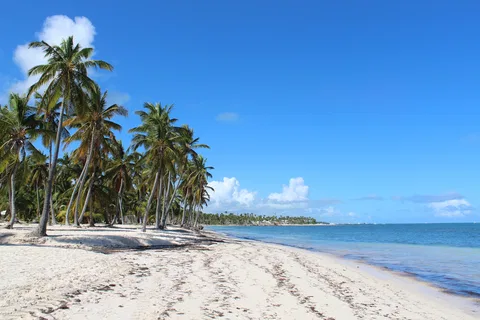
Arena Gorda is the name used for a beach and resort zone toward the northern end of the Bávaro hotel corridor. It is often marketed as part of the larger Punta Cana or Bávaro destination, which can make the geography confusing when comparing properties.
Choose Arena Gorda when you have found a particular beachfront resort you like and want long stretches of sand nearby. It is not a separate town center with a predictable collection of independent bars and shops just behind every hotel.
A beach name alone cannot tell you how easy independent access will be. Before arranging a visit from another district, identify an actual usable entrance and verify transport. If you will stay at a resort here, ask about the specific swimming conditions, seaweed management and pool alternatives.
Avoid interpreting an aerial photo of Arena Gorda as proof that a different part of the coast has the same wave or reef conditions.
Los Corales and El Cortecito: beach access with more everyday services#
Los Corales and El Cortecito are useful names to know when you would rather stay near local restaurants, vacation rentals and visitor services than remain entirely on an all-inclusive property.
Choose these parts of the broader Bávaro corridor when your priority is mixing beach time with off-property meals and errands. They may be more practical for an independent stay, although walkability still depends on the exact rental address, available street access and whether a path to the shoreline is actually usable.
There is an important difference between a beach neighborhood and a guaranteed public entrance. Some beach approaches run through commercial premises or privately managed spaces. Confirm how to reach the sand without crossing a resort’s controlled grounds.
Also do not assume that Los Corales, El Cortecito and every nearby resort have identical water conditions. For more about staying in the district rather than just visiting the beach, see the Bávaro area guide.
Playa Blanca and the Punta Cana coast near the airport#
The beaches nearer Punta Cana International Airport are not one uniform public-beach district. Playa Blanca lies within a managed resort area, while the broader coast includes hotel sections and facilities with different rules.
This is worth understanding if your flight arrives early or you have a few hours before departure. A beach that looks close to PUJ on a map is not necessarily somewhere you can enter freely, leave luggage or catch a quick taxi without planning.
Choose Playa Blanca only after confirming access with a specific operator, restaurant or host. Find out what reservation, identification or day-use arrangements are required and whether the facilities you expect are actually included. The water may look protected in photos, but current conditions still matter.
If airport travel is part of the day, also consider the time needed for check-in and the return drive. For arrivals and pickup logistics, consult our Punta Cana airport transport guide.
Which Punta Cana beach is better for swimming with children?#
Choose by current supervision and conditions, not by a permanent beach ranking. If you are traveling with young children or someone who is not a confident swimmer, start with a hotel or day-use location that can confirm designated swimming areas, lifeguard guidance where available and appropriate pool alternatives.
Macao and Uvero Alto are known for exposed Atlantic conditions that can become difficult. Juanillo is often described as more relaxed, but it would be misleading to promise calm water at every hour or entry point. Bávaro, Cabeza de Toro and other resort coasts also need beach-specific checks.
Before getting in, look for the day’s warning flags, ask lifeguards when present and watch the surf. Rip currents can occur even on clear, sunny days, and waves breaking directly onto the sand can be dangerous. Never enter rough water simply because you see someone else swimming farther along the beach.
If a rip current carries you away from shore, NOAA advises staying calm, avoiding a direct fight against it, moving along the shoreline if possible, or floating and signaling for help if you cannot escape. Follow local lifeguard instructions.
For a family choosing accommodation, it may be more valuable to have a usable pool and shade on a rough-surf day than to pay extra for a prettier ocean view.
Are Punta Cana beaches public?#
The shoreline and the facilities behind it are separate questions. A public beach does not automatically provide a public route through private resort grounds, nor does it confer free use of beach-club loungers, toilets, restaurants or swimming pools.
Macao is a straightforward example of a public day-out destination. Elsewhere, tourists may need to locate a recognized public access point, stay at a property on that stretch or arrange a venue reservation. Within managed communities such as Cap Cana, entrance arrangements may be required even for visitors who simply want to reach a particular beach.
When planning a day trip, ask these questions in advance: Where exactly is the entrance? Can someone not staying at the hotel use it? Are any fees tied to a separate service? Where can the driver park and return? These answers matter more than the phrase public beach on a map.
Seaweed, seasons and changing beach conditions#
Sargassum and other seaweed can wash up along parts of the coast. The amount changes with currents, wind, season and local cleanup practices. Seaweed in a review photo is a snapshot, not a forecast for your vacation.
Some resorts maintain the beach in front of their facilities, but no accommodation can guarantee that natural conditions will look the same each day. If clean sand is a major deciding factor, ask a property for recent information about its exact stretch of beach rather than asking if all of Punta Cana has seaweed. Our Punta Cana sargassum guide explains the seasonal patterns, satellite outlooks and resort questions.
There is no single universally best month for every beach activity. Weather, water conditions and visitor levels each matter differently to surfers, swimmers, families and people looking for quieter surroundings.
How to choose your beach without wasting a day#
For one day outside the resort, Macao is a good starting point if you want a genuinely public shoreline and do not require calm swimming. For a resort-based holiday, compare specific properties on Bávaro, Cabeza de Toro, Arena Gorda or Uvero Alto rather than switching hotels based on beach labels alone. For a planned scenic outing to Cap Cana, consider Juanillo after confirming visitor and venue access.
If your priorities include swimming with children, independent restaurants, day trips and a comfortable hotel, decide which two matter most and choose the area that makes them easiest. It is often better to stay somewhere convenient and visit another beach once than to book an isolated location and spend the holiday paying for repeated transfers.
The most useful beach choice is one that fits where you are staying, how you move around, what the sea is doing and how you actually like to spend the day.
Sources and further reading#
- Dominican Republic Ministry of Tourism: Punta Cana: official description of the destination and key beach districts.
- Dominican Republic Ministry of Tourism: Playa Macao: surf, public beach setting and food.
- Dominican Republic Ministry of Tourism: Playa Juanillo: scenery, watersports and beach services.
- Dominican Republic Ministry of Tourism: Playa Uvero Alto: surf and warning about undertow.
- Dominican Republic Ministry of Tourism: Playa Punta Cana: geography near the airport-side hotel coast.
- NOAA: Dangers at the Beach and National Weather Service: Rip Current Safety: risks of shorebreak and rip currents.
- Photographs: Hero: Oleg Yunakov, Bávaro Beach, 2024, adapted under CC BY-SA 4.0. Macao: Punta Cana Just Safari, 2013, adapted under CC BY-SA 3.0. Uvero Alto: Punta Cana Just Safari, 2013, adapted under CC BY-SA 3.0. Cabeza de Toro: Danu Widjajanto, 2020, adapted under CC BY-SA 4.0. Images were resized; historic photographs do not establish present-day beach conditions.