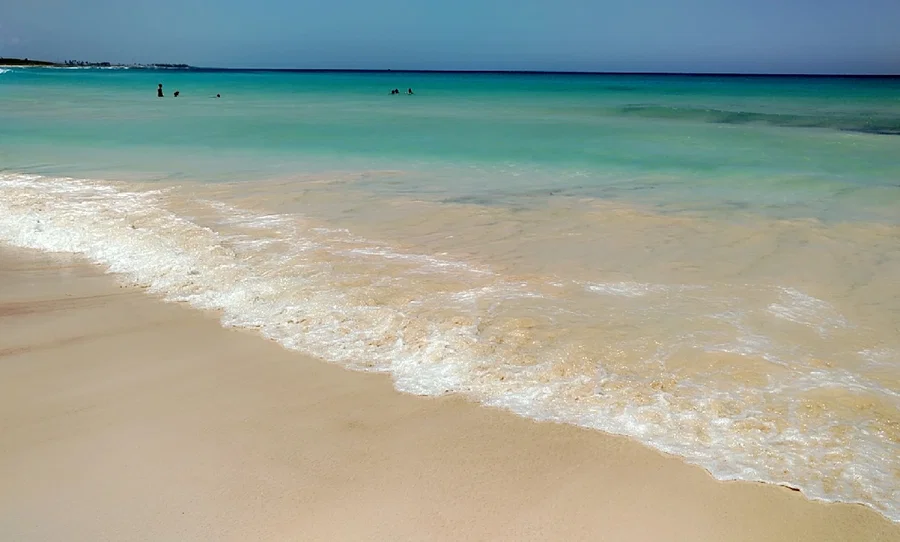
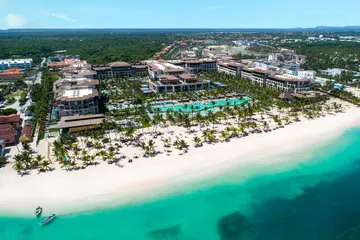

Macao Beach is where many visitors discover a different side of Punta Cana. Instead of entering through a resort lobby, you can arrive at a public beach, find a stretch of sand, watch surfers work the waves and order a Dominican-style fish lunch nearby. The setting is beautiful, but the ocean is much more active than the flat-water scenes often used in Caribbean vacation ads.
Also called Playa Macao, this broad, palm-lined beach lies along the northern Punta Cana coastline between the better-known Bávaro districts and the Uvero Alto resort zone. The Dominican Republic’s official tourism website highlights its surf, trade winds and local restaurants.
The question is what kind of beach day you want. A walk and a seafood lunch are straightforward plans; learning to surf calls for an instructor; taking small children into breaking waves requires much more caution.
Where is Macao Beach in Punta Cana?#
Macao sits on the open Atlantic side of La Altagracia Province, north of central Bávaro and south of the Uvero Alto coast. It is not another name for Bávaro Beach and is not inside the access-controlled community of Cap Cana.
If your hotel is in the broader Punta Cana destination, do not assume that Macao is a short stroll away. The resort districts stretch along a substantial part of the coast. A hotel in Bávaro, a villa inside Cap Cana and a resort in Uvero Alto can all advertise a Punta Cana address while requiring different routes to this beach.
The most useful distinction is the actual destination: the public access area for Playa Macao, rather than a nearby resort entrance or a general map pin for Macao. Confirm the precise drop-off point with your driver before leaving.
If you are still comparing where to base your holiday, our Punta Cana areas and accommodation guide explains the location trade-offs; the Bávaro area guide covers the more developed resort districts farther south.
Is Macao Beach public and free to visit?#
Yes. Playa Macao is a public beach. You do not need an all-inclusive resort reservation or a beach-club wristband simply to visit the public shoreline. That is a major part of its appeal for travelers staying elsewhere in Punta Cana.
However, public beach does not mean every service is free or every adjacent entrance is open. Separate the place you can visit from optional commercial services:
| What you want | What to expect |
|---|---|
| Walk on the public sand | No resort reservation required for the public beach |
| Bring your own towel and spend time on the sand | Generally possible in the public-use area, subject to local rules |
| Use a chair, umbrella or shade structure supplied by a vendor | Ask for the price and terms before using it |
| Eat at a beach restaurant | Pay the menu price; confirm the total before ordering |
| Take a surf lesson or rent equipment | Arrange separately with an operator |
| Use a hotel’s pool, loungers or private facilities | Not included merely because the shoreline is public |
A hotel may have controlled facilities beside a public shoreline. Do not cross its grounds or assume a restaurant, swimming pool or lounge is included in a general beach visit.
If you arrive with a taxi, decide where you would like to meet the driver afterward. Macao’s public-access setting makes an independent visit easier than a resort-only beach day, but the return ride still needs planning, especially if your hotel is far away.
What is Macao Beach like?#
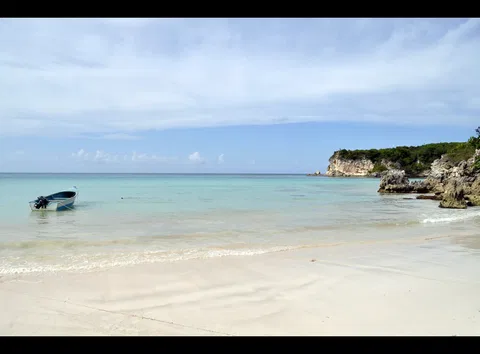
The beach is broad and open, with pale-to-golden sand, palms, low coastal landforms and a view of breaking waves. It tends to feel less enclosed than a beach lined continuously with all-inclusive loungers. You may see local families, beach vendors, surf instructors and visitors arriving from other Punta Cana districts.
Unlike a heavily managed resort beach, some of the experience is informal. Services and their locations can change. A photo showing empty sand does not mean the beach will be uncrowded when you arrive, particularly on weekends and local holidays.
For many visitors, Macao’s greatest strengths have nothing to do with entering the water: room for a beach walk, the sound of surf, a local meal and the chance to see a different coastal setting. It works as a half-day outing even if ocean conditions are not suitable for swimming.
Food, chairs and practical facilities#
Macao is known for local Dominican food, especially fresh fish dishes. The official tourism guide mentions fish restaurants along the beach, but menus, hours and prices should be confirmed on the day. Ask whether the quoted amount includes side dishes, drinks, taxes and service, and agree on any chair or umbrella rental price before sitting down.
Bring drinking water, sun protection and some cash in smaller denominations, even if a particular business advertises card payment. Toilet and changing facilities may be tied to an establishment rather than being uniformly available along the entire shoreline. Avoid planning a visit around a specific amenity unless you have confirmed it.

Can you swim at Macao Beach?#
Swimming is condition-dependent, not something to assume is safe every day. Macao faces the Atlantic and is known for its waves. A beach that attracts surfers can develop strong breaking surf, shorebreak and rip currents. Even water that looks appealing from above may be difficult or unsafe to enter.
The safest decision is to check that day’s conditions at the exact part of the beach you intend to use. Look for posted warning flags or signs and seek current guidance from an authorized beach-safety professional, if one is present. Do not assume that a lifeguard or supervised swimming zone will be available at every access point.
A few distinctions matter:
- Small-looking waves can still knock someone off their feet. Shorebreak can be dangerous where waves collapse close to the sand.
- A calm-looking channel is not automatically safer. Rip currents sometimes create gaps in the breaking waves that look deceptively smooth.
- Surf lessons and casual swimming are different activities. A suitable lesson includes equipment and direct instruction appropriate to the conditions; that is not evidence that unsupervised swimming is safe.
- Conditions can change during a visit. The same beach may look very different after wind and swell increase.
For young children and weak swimmers, consider enjoying the sand and shoreline without entering breaking water. If swimming is a non-negotiable part of your holiday, choose a beach with available lifeguard supervision and conditions appropriate for your group rather than relying on a fixed recommendation that Macao is always safe.
What if you encounter a rip current?#
The U.S. National Weather Service and NOAA explain that a rip current can carry a swimmer away from shore. It does not typically pull someone underwater. Fighting directly against the current can cause exhaustion.
If you are caught in one, stay as calm as possible, avoid swimming straight against it, and try to move along the shoreline until you are out of the current. If you cannot make progress, float or tread water to conserve energy and signal for help. Follow any local lifeguard’s instructions over general online advice.
If someone else is struggling, alert a lifeguard or emergency responders and use a flotation aid if available. Do not make an untrained rescue attempt into the current. The best prevention is to choose a lifeguard-supervised area when conditions permit and stay out of the water when the risk is unclear.
Surfing at Macao Beach#
Surfing is one of Macao’s defining activities. The Dominican Republic’s official tourism website specifically highlights its swells and trade winds and notes that surf lessons are available for different experience levels. The tourism directory also lists Macao Surf Camp as an established local activity.
That does not mean beginner conditions are guaranteed on every day. Wave height, direction, wind and crowding change; an instructor should choose the actual teaching area and decide whether the conditions work for a particular student.
For a first lesson, ask the operator:
- Is instruction private or shared, and how much direct supervision is included?
- What is the minimum age or swimming ability required?
- Does the price include board, rash guard or other equipment?
- What happens if the surf is unsuitable on your booked date?
- Where exactly do you meet, and is the return transfer included?
Keep surf students and beach swimmers in separate designated areas where local arrangements allow. Do not sit or swim immediately in the path of surfboards. A lesson booked through a beach vendor should be evaluated on its instructor, equipment, safety procedures and clear price, not only on a promise that Macao is good for beginners.
You can also enjoy the surf without participating. Watching lessons and experienced surfers from the dry sand can be just as memorable as a beginner session, particularly for a group with mixed ages and interests.
Getting to Macao Beach from Bávaro, Uvero Alto or the airport#
Macao is best treated as a planned road outing for most visitors staying outside the immediate beach area. A taxi or private driver is straightforward for a group that wants to set its own timetable. An excursion with Macao as a stop may be convenient, but it can leave very little independent beach time.
| Starting point | Practical consideration |
|---|---|
| Bávaro resort districts | Confirm the actual hotel entrance and agree on a return pickup |
| Uvero Alto resorts | Macao is south of this resort coast; check the operator’s permitted pickup locations |
| Cap Cana | The drive crosses a broader part of Punta Cana, so allow for a longer outing |
| Punta Cana Airport (PUJ) | Macao is not an airport-adjacent beach; make a transport plan rather than assuming a brief stopover |
One travel-time estimate cannot cover all those starting points. Roads, traffic, the exact address and the route to the public access point make a difference. Avoid treating a generic Punta Cana map label as a promise about driving time.
If you need airport-arrival logistics, the Punta Cana Airport guide explains pickup arrangements and important questions for transfer operators.
Should you drive yourself?#
A rental car gives you flexibility to leave when you want, but it also makes you responsible for the route, parking and safeguarding your belongings. If your plan is mainly a beach visit followed by lunch, a driver who can confirm the return trip may be simpler than navigating independently.
Confirm any parking charge before handing over keys or accepting help from an informal attendant. Do not leave passports, visible valuables or electronics unattended in a car or on the beach. Exact parking arrangements and prices can change, so the current situation at the entrance matters more than an old travel blog’s rate.
What about buggy and ATV excursions?#
Some coastal excursions include Macao as a short stop. These can be fun for travelers whose priority is the excursion itself, but a photo stop at Macao is not the same as several relaxed hours at the beach. Our Punta Cana excursions comparison helps you distinguish a buggy activity from a proper beach day or an island trip.
Ask about time actually spent there, swimming permissions, group size, where the tour vehicles stop and whether the route involves public roads or environmentally sensitive areas. Do not book a buggy tour as your only transportation if you intend to stay for an afternoon and arrange your own lunch.
Is Macao Beach good for families?#
For time on the sand, often yes; for carefree swimming, not necessarily. Children can enjoy the sand, palms, food and beach atmosphere, but the open-ocean surf changes the supervision you should plan.
For toddlers and younger children, a comfortable plan might be an early visit, shade, snacks and time on dry sand rather than a long day in the water. Parents should keep children well away from unpredictable breaking waves even when they are only playing at the shoreline.
School-age children interested in surfing may benefit from lessons with an instructor who has clear age and swimming-ability requirements. If the instructor decides conditions are unsuitable, treat postponement as a safety decision rather than an inconvenience.
Travelers whose priority is daily pool time, supervised water areas or a comprehensive kids’ program should compare the specific hotel facilities rather than expecting those services from a public beach. Our Uvero Alto guide explains how northern Punta Cana resort stays differ from a standalone Macao day trip.
Macao or Bávaro: which beach experience fits your plans?#
Neither beach is the single correct choice for every traveler. Macao’s appeal is its public, surf-oriented coastal setting; Bávaro covers a wider and more developed collection of resort and visitor districts.
| You want | Macao | Bávaro |
|---|---|---|
| A public beach outing beyond your hotel | A clear reason to visit | Access depends on the particular stretch and route |
| Surf lessons and active waves | A characteristic part of the beach | Varies by location and conditions |
| Several resort facilities in one place | Not part of a public-beach visit | Can be provided by a booked resort, depending on the rate |
| A walk between shops and restaurants | Not the main draw | More possible in some districts, but not everywhere |
| Consistently gentle water | Do not assume it | Check the specific stretch and current conditions too |
For a day out, Macao can provide the contrast you are looking for even if you stay in Bávaro. For a week-long holiday, the practical question is where you want to sleep, eat and spend most evenings. Do not choose an accommodation area from a beach photograph alone.
The Bávaro neighborhood guide covers walkability and resort locations. For a broader choice beyond these two shores, compare the options in our Best Beaches in Punta Cana guide.
What should you bring, and when should you visit?#
A little preparation makes an independent beach outing more comfortable. Pack water, sun protection, a towel, dry clothes, a waterproof pouch for essentials and enough cash for a meal or optional rentals. Arrange return transportation before you need it.
Weekdays may feel different from weekends, when more local visitors and organized excursions can arrive. Weather, school holidays and particular events can change that pattern, so avoid relying on a guaranteed quiet hour.
For beach photographs and a relaxed walk, morning light may suit your plans. For surfing, actual swell and wind conditions take priority over the time shown on a tour brochure. Sargassum can appear along the coast, and its presence varies; no month guarantees a perfectly clear beach.
Before leaving the hotel, confirm the day’s forecast and whether any warnings or restricted access affect the part of Macao you hope to visit. A brief check is especially important when traveling with children or booking a lesson.
The best way to plan a Macao Beach day#
Keep the itinerary simple. Arrange a ride to the public access area, enjoy the scenery from the sand and decide on swimming only after assessing the conditions. If you want to surf, use a suitable instructor. If you want lunch, choose a restaurant and confirm prices rather than treating every vendor as part of one organized beach club.
Macao works best when you visit it for what it is: a public Atlantic beach with a local atmosphere, surf and a landscape that contrasts with the surrounding resort corridors. Enjoy that difference, and make safety and the return journey part of the plan.
Sources and further reading#
- Dominican Republic Ministry of Tourism: Playa Macao - beach setting, location, surfing and local food.
- Dominican Republic Ministry of Tourism: Macao Surf Camp - listed surf instruction provider; check current details with the operator.
- NOAA National Weather Service: Dangerous Currents - rip-current hazards, prevention and response.
- NOAA: Dangers at the Beach - rip-current and shorebreak safety.
- Photo credits: Hero: Carolinarondon, Playa Macao, 2016, resized under CC BY-SA 4.0. Inline shoreline: bogdix, 2009, resized under CC BY 2.0. Inline scenery: Punta Cana Just Safari, 2013, resized under CC BY-SA 3.0. Historical photos are illustrative and do not establish current beach conditions.