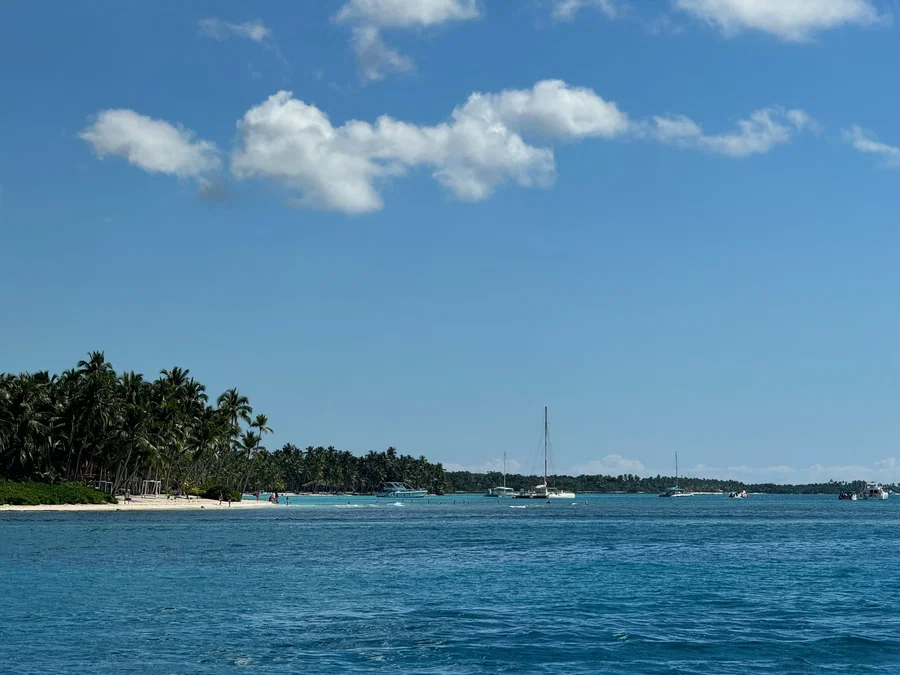
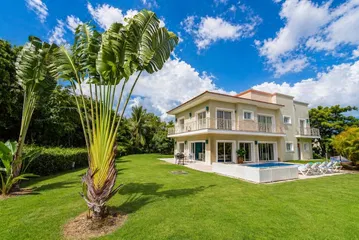
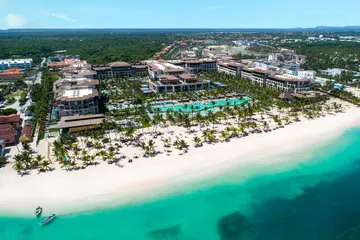

The best things to do in Punta Cana depend on how much of your vacation you want to spend outside the resort. A boat trip to Saona Island, a freshwater lagoon walk at Ojos Indígenas and a zipline day at Scape Park are all advertised as Punta Cana excursions. In practice, they involve very different travel, activity levels and booking arrangements.
Start by choosing the experience you actually want. If your priority is a Caribbean island and swimming stops, look at Saona or Catalina. For forest trails and freshwater scenery, compare Ojos Indígenas and Hoyo Azul. For action, there are ziplines, buggy tours and surfing. If you’d rather see more of the Dominican Republic itself, consider Altos de Chavón, Bayahíbe or a carefully planned cultural day trip.
One important detail: several excursions sold from Punta Cana do not begin in Punta Cana. A Saona boat typically departs from Bayahíbe; Altos de Chavón is in the La Romana area. Pickup from your hotel is a separate part of the experience: travelers based in Bávaro should verify the actual excursion pickup point and transfer arrangements before booking. Confirm where the activity takes place, how long you’ll spend in a vehicle, and exactly what a ticket covers.
This guide focuses on the choice between excursions and the questions worth asking before you pay. It is not a live price list or an endorsement of any unverified tour seller.
Quick guide: which Punta Cana excursion should you choose?#
| Experience | Best fit | Main decision before booking |
|---|---|---|
| Saona Island by boat | Tropical island scenery and a full-day outing | Transfer to Bayahíbe, boat type and actual island time |
| Catalina Island snorkeling or diving | A water-focused trip with snorkeling or scuba options | Exact departure point, sea conditions and operator qualifications |
| Ojos Indígenas Ecological Reserve | Nature trails and freshwater lagoons | Advance reservation, guided format and entry rules |
| Scape Park and Hoyo Azul | Adventure attractions plus a blue cenote | What the ticket includes, swimming/zipline restrictions and Cap Cana transfer |
| Macao Beach surfing | A lesson or a public beach day outside a resort | Wave conditions, qualified instruction and return ride |
| Buggy or ATV safari | A dusty, active inland experience | Route, vehicle safety, driver rules and stops |
| Altos de Chavón | Architecture, river views and culture | Casa de Campo entry arrangements and transport to La Romana |
| Local shopping, food and beach districts | A flexible outing that does not consume the day | Specific location, real public access and transport back |
A full-day tour usually includes time spent collecting other passengers, traveling to a departure point and returning. The activity portion may be much shorter than the advertised duration.
For a traveler with only one free afternoon, a nearby experience is often more enjoyable than a famous island excursion with a long transfer.
Saona Island: the classic Caribbean boat day#
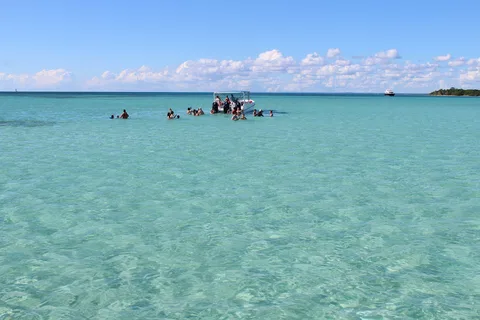
Isla Saona is part of Cotubanamá National Park and is well known for pale sand, palms and turquoise Caribbean water. Official Dominican tourism information identifies Bayahíbe as the usual departure village. Some excursions stop in the shallow Palmilla natural pool; others visit beaches or the inhabited settlement of Mano Juan.
Choose Saona if you want the feeling of a tropical island day rather than a short beach stop. The boat ride is part of the attraction, but also part of what makes this a long excursion from a Punta Cana resort.
Tours can differ considerably. One itinerary might combine a catamaran in one direction and a speedboat in the other; another may favor a smaller boat, a different landing beach or more time on the island. Names such as VIP, premium and private are not standardized descriptions.
Before booking, ask for the exact departure port and route, the boat type in each direction, the planned stops, how much time is scheduled ashore, whether lunch and drinks are included, and the return time at your accommodation. Check the age and mobility suitability of transferring between the shore and a boat.
This is a protected environment. Do not lift or handle starfish or other marine life at natural-pool stops. A shallow sandbar is still open water; children need direct supervision, and operators should provide appropriate flotation and safety briefings.
For travelers who dislike long boat days or are prone to seasickness, Saona may not be the best choice simply because it appears on every excursion list.
Catalina Island: a water-focused alternative#
Isla Catalina, off the La Romana coast, is often promoted for snorkeling and scuba diving. It is a different destination from Saona, even though agencies in Punta Cana may sell trips to both.
Choose Catalina if underwater activities are more important to you than spending hours on a broad palm-lined beach. Snorkeling stops depend on weather, the actual reef site and the tour’s operating plan. Seeing specific fish, clear visibility or a particular coral scene cannot be guaranteed.
Make sure you know whether your ticket is for snorkeling, introductory diving or certified diving; they require different equipment and supervision. An operator may also require age, health or certification information. If you’re a non-swimmer, don’t assume a snorkel excursion is automatically suitable.
Some programs leave from the La Romana or Bayahíbe side, so check the travel time from your specific resort before comparing the total price with a Saona tour. A cheaper headline ticket that excludes transfers or equipment may not be the better value.
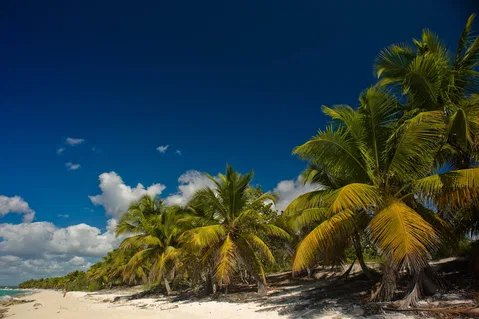
Ojos Indígenas: forest trails and freshwater lagoons#
The Ojos Indígenas Ecological Reserve is a protected nature area within the Puntacana Resort & Club vicinity, managed by Fundación Puntacana. The foundation describes forest trails, wildlife and twelve freshwater lagoons, with swimming permitted in selected lagoons only.
For someone who wants a quieter nature experience rather than another boat trip, this is one of Punta Cana’s most interesting choices. You can learn about local conservation while walking through shaded tropical vegetation and seeing freshwater pools that look nothing like the surrounding Atlantic beaches.
Unlike an unrestricted public beach visit, entry requires arrangements with the reserve. Fundación Puntacana’s visitor guidance currently directs guests to make an advance reservation for the guided Los Ojos Eco Journey. Its own information describes sessions and a guided visit lasting roughly two hours and forty-five minutes, but you should verify the actual session, admission and access process for your chosen date.
Ask which lagoons are currently approved for swimming, whether you need closed-toe shoes and how far the group walks. Trails, wet surfaces and entering natural water may not suit every visitor. Respect rules about sunscreen, insect repellent and protecting the freshwater habitat.
A common planning mistake is assuming that because Ojos Indígenas is in the greater Punta Cana area, you can simply arrive by taxi and enter the reserve at any time. Book first; arrange the correct entrance and transfer second.
Scape Park: Hoyo Azul, caves and adventure activities#
Scape Park at Cap Cana combines a natural setting with paid attractions such as trails, caves, ziplines and the Hoyo Azul freshwater cenote. It can be a good fit for travelers who want multiple activities in one venue instead of spending most of the day transferring between different sites.
The park’s official website lists its operating schedule and notes that some attractions have more limited hours than the park itself. Do not assume every activity is available continuously or included in every ticket type.
Choose Scape Park if your group is comfortable with walking and wants an active day. Some experiences involve heights, harnesses, swimming, uneven paths or physical effort. Hoyo Azul is a striking freshwater pool, but swimming arrangements, safety supervision and the usable entry routes are controlled by the operator.
Check the current ticket package, the transport inclusion, height/weight/age restrictions, any medical restrictions, and whether a guide or locker is provided. You should also ask about weather-related closures and the last time you can start your preferred activity.
Scape Park is not the same place as Ojos Indígenas. Both have freshwater settings, but the operators, location, booking procedure and mix of activities are different. Choose the reserve for a conservation-oriented visit; choose Scape Park for a broader adventure-park day.
For more about Cap Cana as a destination and how access works around its managed community, use our Cap Cana area guide.
Macao Beach surfing: an excursion without a full-day transfer#
Not every worthwhile outing requires a crowded bus or a boat. Playa Macao is a public beach on Punta Cana’s Atlantic side, known for waves and surf instruction.
Choose Macao if you want a surf lesson, time on the sand or local fish near the beach. Compared with an island day trip, you can often structure a shorter visit around the part of the day you prefer, though the actual journey depends on your starting neighborhood and traffic.
The same waves that attract surfers mean you should not treat Macao as a guaranteed calm swimming beach. Lessons need to be adapted to conditions and swimming ability. Ask who provides instruction, whether the equipment is included, how beginners are supervised and what happens if the surf is unsuitable.
You also need to plan the practical return: confirm a public beach approach, where your driver will meet you, and which amenities are optional paid services. Our Macao Beach access, surf and swimming guide covers those details.
If you’d rather stay near an independent restaurant and walk the coast, consult our Bávaro Beach public-access guide. It is a different experience from the exposed surf at Macao.
Buggy and ATV tours: check the actual route#
Off-road buggy excursions are widely marketed in Punta Cana, often combining dirt roads, muddy terrain and rural stops. The appeal is an active ride rather than a quiet sightseeing transfer.
Choose a buggy outing if you enjoy driving on rough ground and are comfortable getting dusty or wet. The experience varies significantly by operator. Some routes are largely tracks and roads with several short stops; others focus more on the driving itself. Advertising imagery may not resemble the route on your date.
Before paying, establish whether you are driving or riding, the minimum driver age and license requirement, protective equipment, passenger limits, route surface and the duration actually spent in the vehicle. Ask about insurance, damage deposits and what happens in heavy rain.
An especially important distinction is a stop at a rural community versus a meaningful cultural experience. Do not assume a souvenir stop provides an accurate or complete picture of Dominican life. Travelers who want to learn about local history or food may prefer a dedicated cultural visit.
Do not book on the assumption that a buggy can be driven anywhere off-road or on a public beach. Follow the route and local environmental protections, and avoid operators that encourage driving into sensitive habitats.
Altos de Chavón: architecture and a cultural day trip#
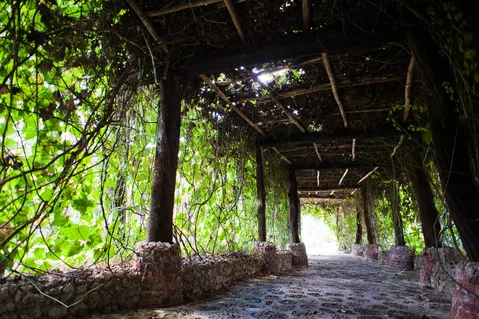
Altos de Chavón is a purpose-built Mediterranean-style village within Casa de Campo, overlooking the Chavón River near La Romana. Its stone lanes, amphitheater, art spaces, museum and river views offer an experience unlike Punta Cana’s beaches.
It is important not to describe it as an intact sixteenth-century Dominican settlement. It is a modern architectural recreation, developed in the twentieth century. The official tourism site describes the village and notes admission arrangements for visitors who are not Casa de Campo guests.
Choose this trip if you enjoy architecture, photography, art or a change from water activities. Some visitors combine it with time in the La Romana or Bayahíbe area; confirm whether that combination actually leaves enough time at each stop.
For an independent visit, check the current entry process, whether the archaeological museum is open, and how the driver will access the community. If a group excursion includes shopping, ask how much of the trip is spent in stores versus sightseeing.
A cultural excursion should be selected for what you will experience, not simply for a list of places that the bus may drive past.
More options: local food, nature and evening activities#
A well-planned Punta Cana vacation does not need an organized excursion every day. A few smaller choices can fit around a pool afternoon or a relaxed morning.
Independent beachfront dining. The Bávaro areas of Los Corales and El Cortecito offer opportunities to eat outside a resort, depending on your exact location and access. A beach restaurant visit can be more flexible than a full-day tour, but services, parking and the shore approach should still be confirmed.
Bayahíbe village and Cotubanamá National Park. Bayahíbe is not merely a parking lot for Saona boats: it is a coastal destination with restaurants and nearby protected landscapes. The national park includes cave and trail options, but park visits may involve permits, guides or specific entry locations. This can be a separate outing from a boat excursion rather than an extra stop squeezed into the same day.
Los Haitises and Montaña Redonda. Both appear in eastern Dominican Republic excursion catalogs, but they are not interchangeable with a short outing in Punta Cana. Longer road sections, weather and different activity logistics make it essential to verify the actual pickup-to-return schedule.
Evening entertainment. Resort shows and independent nightlife can be alternatives to daytime tours. Verify age restrictions, the event being offered, transport back and whether a ticket includes seating or drinks. A venue’s advertised brand does not mean every performance or package is the same.
The distinction is whether you want a genuine day exploring the country or an activity that fits comfortably between other plans. Both are valid; your available time determines which is sensible.
How to choose excursions with children or mixed-age groups#
A family with a toddler, grandparents and older children may not enjoy the same itinerary, even if everyone likes the pictures.
| Traveler or priority | Often the better starting point | What can change the choice |
|---|---|---|
| Young children | A shorter nature outing or a flexible local beach visit | Walking surfaces, heat, swimming supervision and nap timing |
| Older children who like adventure | Scape Park or a suitable guided activity | Age, height and harness restrictions |
| Confident swimmers | A properly supervised snorkeling outing | Operator qualifications, marine conditions, equipment |
| Travelers prone to seasickness | Ojos Indígenas or a cultural visit | Long boat crossings and sea state |
| Limited mobility | A prearranged sightseeing visit with confirmed accessible routes | Uneven forest trails, boat boarding and park paths |
| One excursion during a short stay | Choose one signature activity based on group preference | Hotel-to-activity travel and overall time away |
Do not assume that family friendly means stroller-friendly, appropriate for every age or suitable for guests with physical limitations. Ask the operator directly about the least accessible part of the route, not merely whether children are allowed.
For a family that primarily wants water slides and resort facilities, compare accommodation-based water parks rather than assuming a separate adventure excursion is the best way to spend the day.
What does an excursion price actually include?#
Prices are among the least reliable details in evergreen destination content. They change by operator, season, boat type, ticket version and pickup area. Instead of quoting a number that may be out of date, compare the final paid experience.
Before confirming, check:
- Pickup and return. Is transport included from your named resort, rental or meeting point? Is there a surcharge for a remote district?
- The actual activity. Are snorkeling equipment, nature-reserve admission, attraction access and guides included, or are they optional extras?
- Food and drinks. Is there a meal, a snack, bottled water or nothing? What happens if you have dietary needs?
- Timing. How much is transport, how much is the activity, and when are you realistically back?
- Restrictions. Are there minimum ages, mobility limits, medical contraindications or swimming requirements?
- Cancellation. What happens if marine conditions close the route, if it rains, or if you cannot attend? Read the written policy.
- The operator. Who actually operates the boat, vehicle or attraction, and who is responsible for safety and refunds?
These questions make a comparison between a group excursion and a private tour more meaningful. Paying extra for a smaller group may be worthwhile when the itinerary genuinely allows more time, flexibility or direct transport. It is less useful when a VIP label changes little except the marketing.
Avoid paying a seller who cannot identify the operator, departure point, inclusions or cancellation terms. A booking confirmation should make the service clear enough that you can resolve a problem without guessing.
Weather, water safety and responsible travel#
A tour being offered year-round does not mean it runs in every weather condition. Wind, swell, rainfall and local warnings can affect boat trips, snorkeling, ziplines and off-road routes. A rain forecast alone does not establish whether an activity is safe, so let the qualified operator and relevant authorities make the go/no-go decision.
On boats, ask about life jackets sized for children, emergency procedures and boarding arrangements. In the water, respect lifeguards and guides. Keep away from coral, do not handle starfish and do not feed wildlife to create a photo opportunity.
For nature reserves, stay on marked paths and follow any restrictions about swimming, sunscreen and wildlife. A freshwater lagoon is not a swimming pool, and its ecology is part of the reason it is worth visiting.
If traveling during a period when sargassum is washing ashore, review our Punta Cana seaweed and sargassum guide for monitoring resources and practical beach questions. A regional forecast cannot tell you the exact conditions at a tour stop.
Three ways to plan excursion days without overloading your trip#
One full day available: Make Saona, Catalina or an inland cultural tour your main outing. Protect the rest of the day from additional bookings. Confirm that the return time suits dinner and any transport connections.
One morning or afternoon available: Consider a reserved nature visit, a surf lesson when conditions are appropriate, or local food and shopping. The exact activity length and transfer still matter: half-day is an operator description, not a universal number of hours.
Several days available: Mix one water day, one nature or adventure day, and at least one flexible day. For example, Saona followed on another date by Scape Park or Ojos Indígenas offers variety without stacking boat travel and strenuous activities into a single outing.
If you are still choosing a hotel or villa, remember that Punta Cana is geographically spread out. Staying in Cap Cana, central Bávaro or Uvero Alto affects how convenient some excursion departure points are. Our Punta Cana Where to Stay guide explains those location trade-offs, while the airport arrivals and transfers guide helps with arrival logistics.
The best excursion is one you can enjoy from start to finish, not necessarily the one with the longest advertised stop list. Choose a clear activity, confirm the actual journey, check the operator and leave room for Punta Cana itself.
Sources and further reading#
- Dominican Republic Ministry of Tourism: Punta Cana - official destination overview and types of excursions.
- Dominican Republic Ministry of Tourism: Isla Saona and Cotubanamá National Park - protected-area geography, Bayahíbe departure and island destinations.
- Dominican Republic Ministry of Tourism: Bayahíbe - coastal departure town, Catalina Island and national-park activities.
- Fundación Puntacana: Ojos Indígenas Ecological Reserve and visitor FAQ - guided conservation tour, reservation and lagoon rules.
- Scape Park at Cap Cana: Official information - park location, attractions and schedule; tickets and restrictions may change.
- Dominican Republic Ministry of Tourism: Altos de Chavón - modern village replica, museum and visitor arrangements.
- Photographs: Hero Saona Island: Oleg Yunakov, 2023, resized under CC BY-SA 4.0. Natural pool near Saona: Danu Widjajanto, 2020, resized under CC BY-SA 4.0. Catalina Island: Mstyslav Chernov, 2011, resized under CC BY-SA 3.0. Altos de Chavón: Mstyslav Chernov, 2011, resized under CC BY-SA 3.0. Historical photographs are illustrative and do not establish conditions or availability today.